
The surprise in most AI tool stack for marketing teams audits is that the problem usually isn't missing software. It's too much software, too many weak handoffs, and too little shared data. Recent martech guidance pegs the average B2B stack at 12 to 20 tools, says 92% of companies keep stacks at 20 tools or fewer, and finds 62.1% of marketers now use more tools than they did two years ago, which is why the stack has to be treated like a system, not a shopping list, as shown in the 2026 martech survey.
That's the lens here. For growth-stage teams, the question is which tools connect CRO, GTM engineering, AI search optimization, and agent commerce readiness into one operating model. The strongest stacks pair creation, personalization, experimentation, and measurement, because integrated workflows can produce content 4× faster, drive 25–30% higher email engagement, and launch AI-driven campaigns 75% faster with 47% better click-through rates than manual campaigns, according to the same stack guidance.
If you want a broader marketing AI software guide, this is a useful companion read, marketing AI software guide.
Table of Contents
- 1. HubSpot Marketing Hub + Content/AI (Breeze, Content Hub)
- 3. Jasper
- 3. Jasper
- 4. Writer
- 5. Surfer
- 6. Mutiny
- 7. Clay
- 8. VWO
- 9. AdCreative.ai
- 10. 6sense
- AI Marketing Stack, Top 10 Tools Comparison
- From Stack to System Your First 90 Days
1. HubSpot Marketing Hub + Content/AI (Breeze, Content Hub)
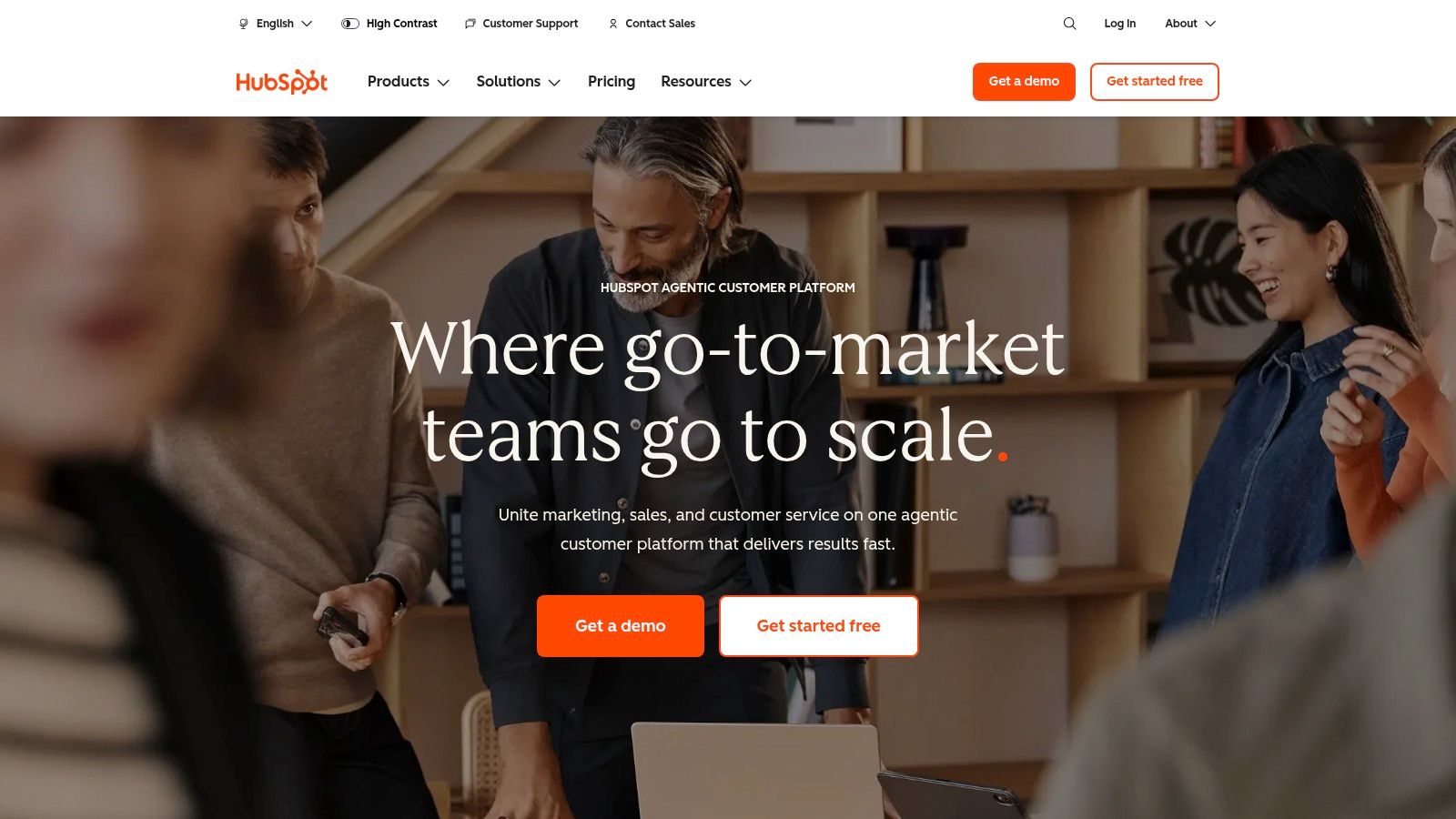
HubSpot is the closest thing most growth-stage teams will get to a marketing operating system. It earns the first slot because the stack dies fast when CRM data, marketing automation, and reporting live in separate places. HubSpot's native connection between Smart CRM, campaign automation, attribution, and Content Hub gives you one place to run the process, which matters more than people admit when they're trying to shorten revenue cycles.
The AI layer is now broad enough to support real production work. HubSpot's AI tools cover emails, blogs, pages, and social, while Breeze agents can generate content, surface insights, and take actions across the system. That makes it a practical home base for teams that need speed without turning every output into a manual review project. For a B2B team, this is also where the marketing and sales handoff becomes less fragile, because the data stays tied to the record instead of scattered across exports and spreadsheets.
Practical rule: Use HubSpot as the control plane if you want one source of truth for reporting, lifecycle automation, and content operations.
The trade-off is packaging complexity. As you add seats and hubs, costs and admin overhead can get messy, and some advanced AI capabilities still roll out by tier. That said, the mature ecosystem makes it easier to train teams, hire against the platform, and standardize workflows. If your team wants one system that can anchor CRO with AI and pipeline reporting, this is the safest starting point. See Stimulead's B2B AI marketing perspective in this guide, Stimulead on AI for B2B marketing.
Website, HubSpot
3. Jasper
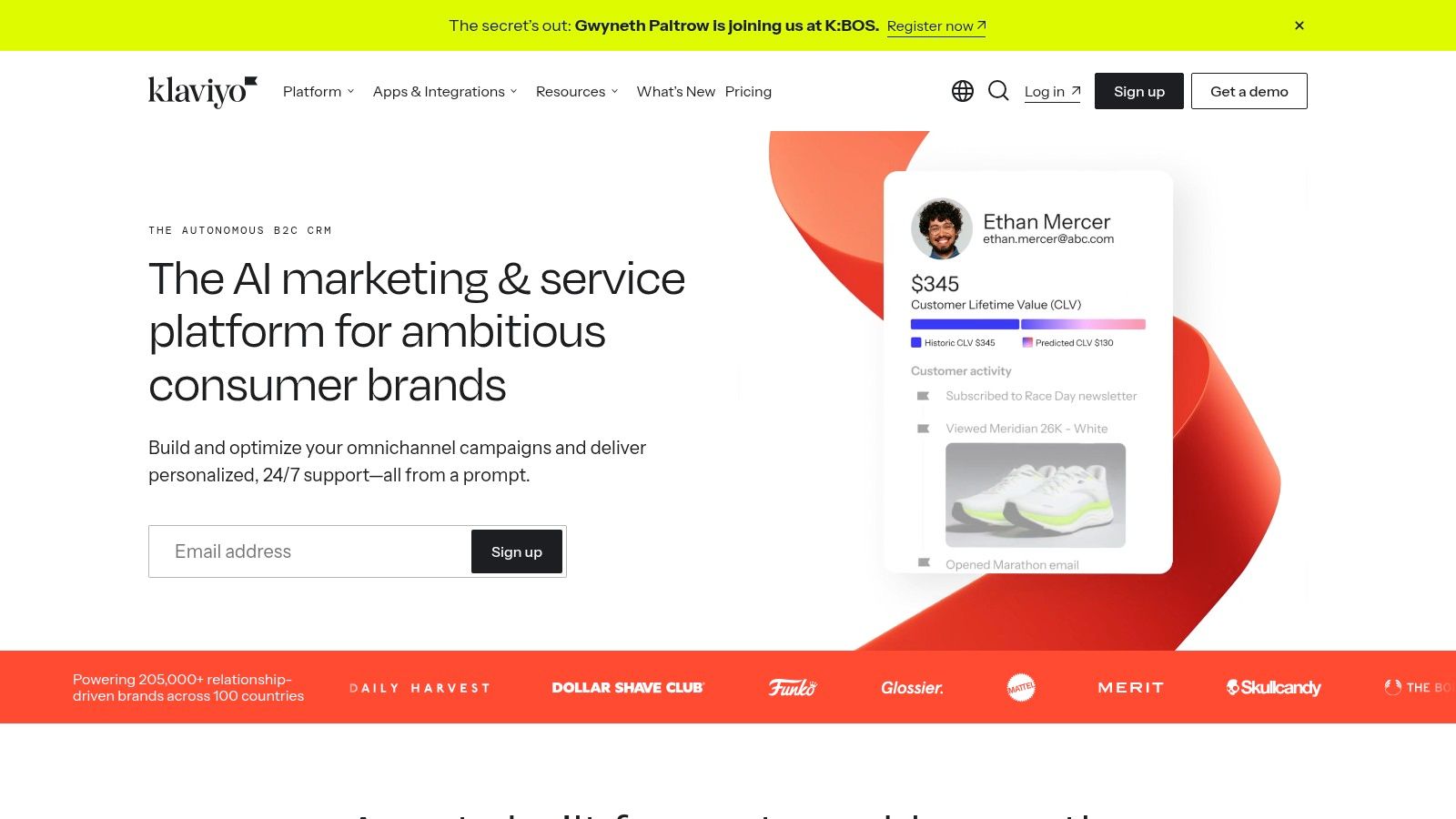
Jasper is built for teams that ship branded content at speed and need control, not chaos. Jasper delivers governed content production across ads, pages, email, and social, with brand voice, style guides, templates, approvals, and team workflows keeping output consistent as more people touch the process.
That matters once content starts moving through marketing, creative, and demand gen at the same time. The bottleneck is usually review, consistency, and the time lost fixing drafts that drift off-brand. Jasper cuts that drag because it is designed for marketers, not a general chat interface that has to be re-prompted every time the brief changes. It also helps when a single campaign brief has to become a set of channel-specific assets without forcing every writer to rebuild the same message from scratch.
The trade-offs are real. Usage-based elements need cost oversight, and Jasper does not replace a dedicated SEO tool. Pairing it with Surfer or another optimization layer is the cleaner setup if search performance matters. That split is useful, because generation belongs in one place and optimization in another, especially if SEO and AI search visibility sit in the same workflow.
Where Jasper Fits Best
- Campaign production: Turn one brief into paid ads, landing page copy, nurture emails, and social posts while keeping the message aligned.
- Brand governance: Keep voice, tone, and approvals consistent across contributors so reviews do not become a cleanup exercise.
- Cross-channel content ops: Use Jasper when marketing teams need a repeatable process for moving from concept to publish across multiple formats.
- Fast content iteration: Speed up revisions without losing control over the final output, which matters when launch dates move or offers change.
- Team collaboration: Give writers, managers, and approvers one place to work from instead of scattering drafts across docs and chat threads.
3. Jasper
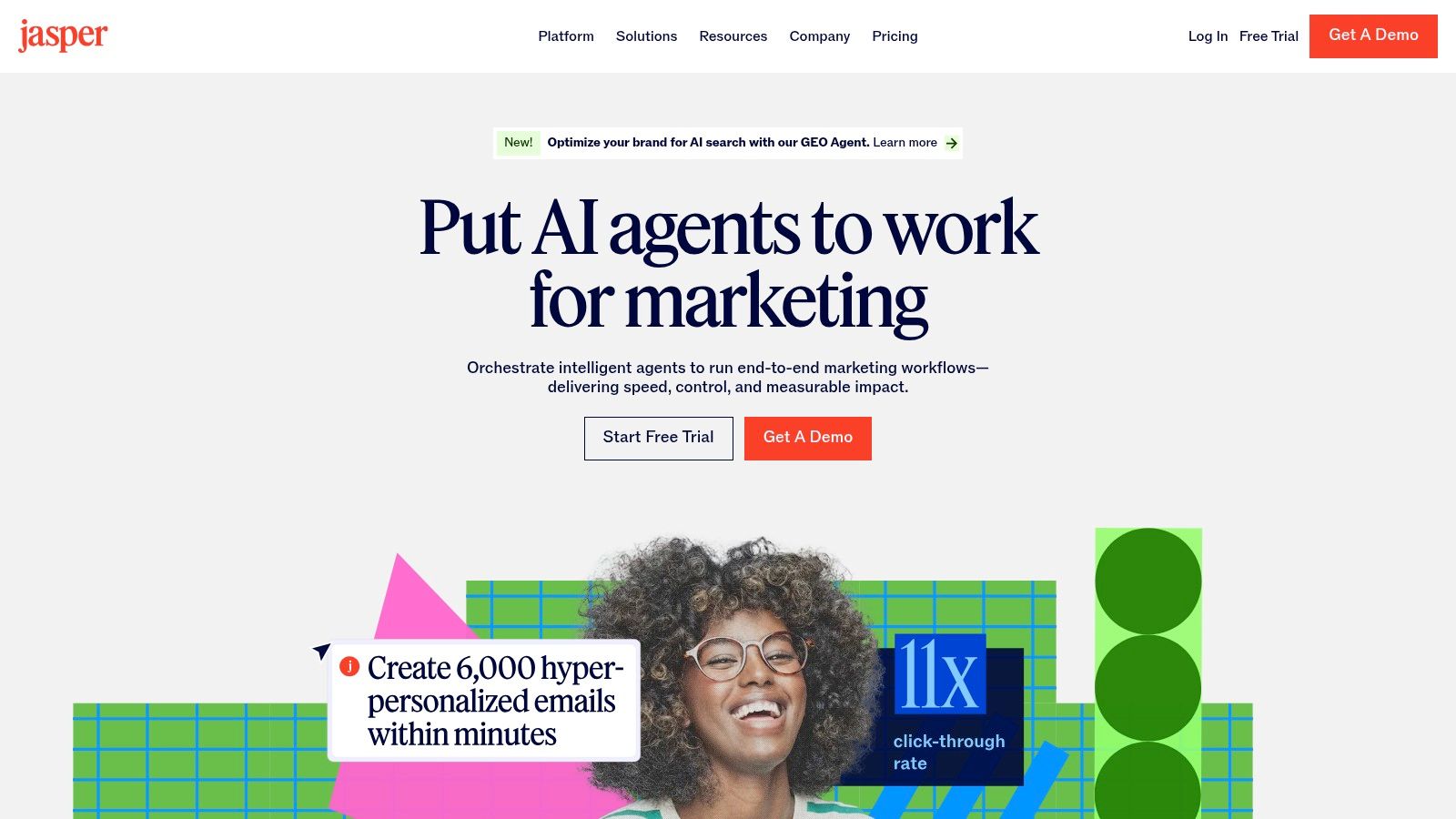
Jasper is for teams that ship a lot of branded content and can't afford chaos. The value isn't generic text generation, it's governed content production across ads, pages, email, and social. Brand voice, style guides, templates, approvals, and team workflows make Jasper feel like a content operations layer instead of a one-off assistant.
That distinction matters for growth-stage companies. Once multiple stakeholders touch content, the bottleneck usually becomes review, consistency, and the time spent reworking drafts that drift off-brand. Jasper helps reduce that drag because it is built for marketers, not a general chat interface that has to be re-prompted every time the brief changes. It also works well when a campaign brief needs to turn into a set of channel-specific assets without forcing every writer to reinvent the wheel.
A few practical limits still matter. Usage-based elements need cost oversight, and Jasper does not replace a dedicated SEO tool. Pairing it with something like Surfer or another optimization layer is the cleaner path if search performance matters. That split is healthy anyway, because you want generation in one place and optimization in another, especially if SEO and AI search visibility are part of the same workflow.
Where Jasper Fits Best
- Campaign production: Turn one brief into paid, email, and social assets with fewer handoffs.
- Brand governance: Keep voice, terminology, and style aligned as the team grows.
- Marketing ops: Give non-writers a safer path to first drafts and variations.
If your team is building a repeatable content engine, Jasper belongs near the center of the workflow. It's less useful if you need deep account data, experimentation, or revenue orchestration. Website, Jasper
4. Writer
Writer fits teams where governance matters more than creative exploration. Regulated companies, brand-sensitive organizations, and larger marketing teams need consistent terminology, controlled output, and guardrails that keep risky language from reaching customers. Writer's brand voice profiles, terminology rules, knowledge ingestion, and templates make it a strong choice for disciplined content operations.
That discipline has operational value. Many AI writing tools speed up ideation, then push editing and QA back onto the team. Writer shifts more of that control into generation itself by applying rules early, which reduces the back-and-forth that starts when legal, compliance, sales, and marketing all want input on the wording. For companies selling products that require precision, that saves cycle time and lowers revision load.
The trade-off is straightforward. Writer is more enterprise-oriented, so pricing is usually custom, and it offers less out-of-the-box ideation than creator-first tools. That makes it a weaker fit for small teams that want playful brainstorming, and a stronger fit for operators who need predictable output across marketing, support, and sales.
If your content fails QA often, the issue may be your generation layer, not your editors.
Writer pairs well with a stack that already has a clear system for measurement and distribution. It handles the language layer cleanly, but it still needs a proper workflow around approvals, SEO, and campaign execution. For teams that care about brand risk and consistency, this is one of the more dependable options. Website, Writer
Governance Comes First Here
Writer makes sense when the cost of a bad draft is high. It fits legal, finance, healthcare, and B2B brands with strict terminology rules. If your team's biggest problem is inconsistent messaging rather than a lack of ideas, Writer is usually the smarter buy.
5. Surfer
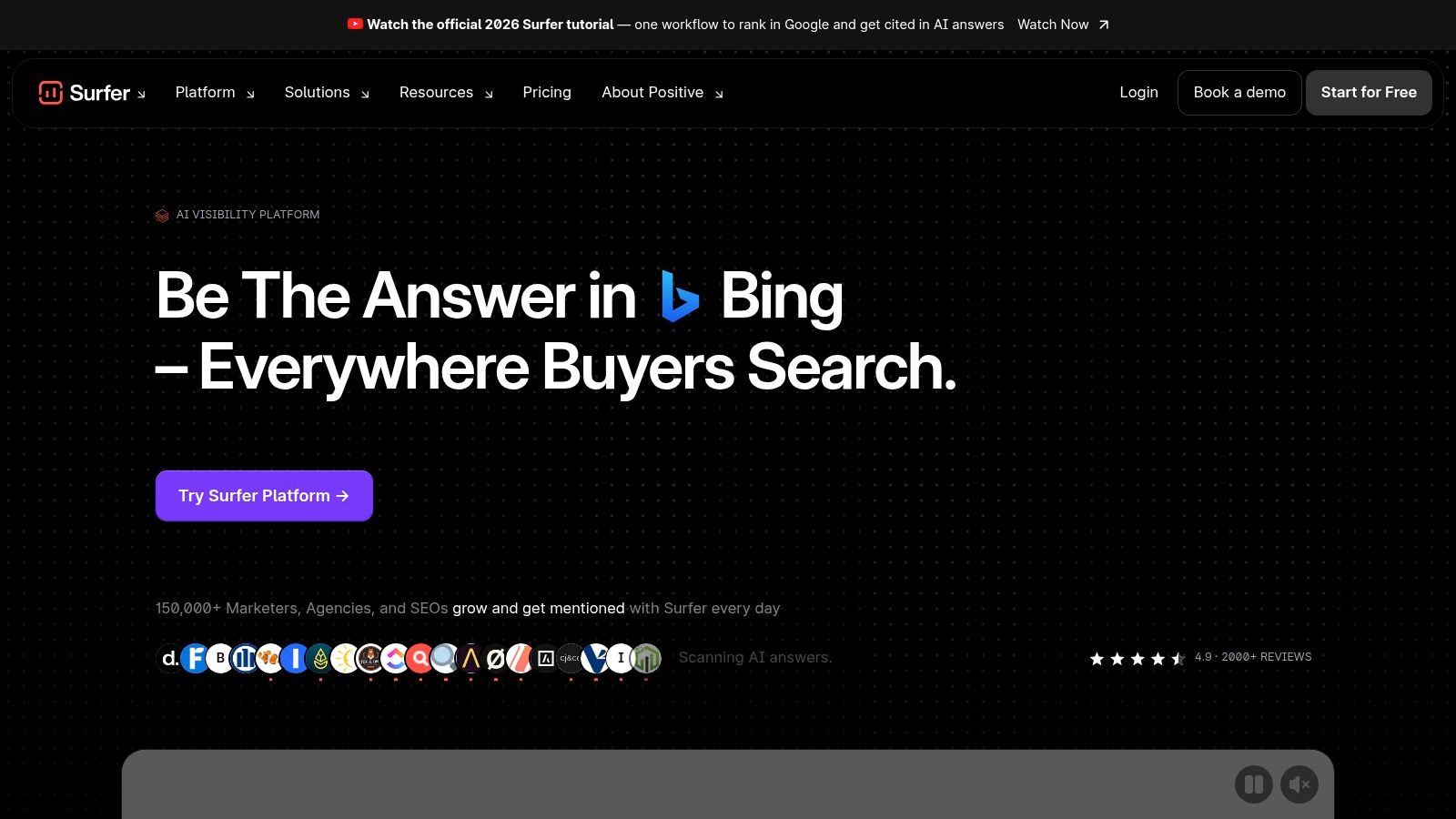
Surfer is the optimization layer that most content stacks need and too many skip. It helps teams turn topic intent into briefs and drafts that can perform in both traditional search and emerging AI visibility workflows. If your content team is still writing first and optimizing later, you're paying twice for the same page.
The appeal is operational, not theoretical. Surfer's Content Editor gives clear entity and heading guidance, its audit functions help with existing pages, and its keyword discovery gives non-SEOs a better shot at publishing something that can rank. That makes it especially useful for marketing teams that don't have a deep in-house SEO bench but still need steady organic output. It also fits neatly beside Jasper or Writer, because those tools generate the draft and Surfer shapes the page around search intent.
The limits are real. You need to watch plan usage and credits, and it's not a full backlink or technical SEO platform. That means Surfer should be part of the content and discoverability layer, while technical SEO lives elsewhere. Teams that try to make it the whole search strategy usually end up disappointed.
For brands thinking about AI search optimization and answer engine visibility, this layer matters even more. Stimulead's AI search perspective digs into that exact shift, Stimulead on AI search optimization. Surfer is where the page starts to become retrievable by both search engines and newer discovery systems. Website, Surfer
6. Mutiny
Mutiny is the cleanest no-code answer for website personalization in B2B. If your homepage still shows the same message to every visitor, you're leaving money on the table and wasting traffic from paid, outbound, and ABM programs. Mutiny's AI GTM assistant, segmentation logic, and no-code editor let teams change headlines, proof bars, and modules by audience without waiting on engineering.
That matters because growth-stage teams usually have enough traffic to test, but not enough developer time to support constant variation. Mutiny helps marketing and RevOps move faster on audience-specific experiences, which is exactly what you need when you're trying to convert strategic accounts, product-qualified leads, or traffic from specific campaigns. It fits especially well in ABM, PLG, and other segmented B2B motions where the message has to match intent quickly.
The catch is that you need clean segmentation and enough traffic to learn from the tests. Premium pricing also pushes it toward mid-market and enterprise budgets. In practice, that means you should buy it when the team already knows which audiences matter and has a path to measure impact, not when the website strategy is still fuzzy.
Best Use Cases
- ABM landing pages: Different proof for different account tiers.
- Persona routing: Change value props based on role or industry.
- Campaign matching: Make paid traffic land on pages that reflect the ad promise.
Mutiny is one of the most practical tools in the stack for CRO with AI because it reduces the delay between an insight and a live test. If the team can't launch variation fast, the idea never turns into pipeline. Website, Mutiny
7. Clay
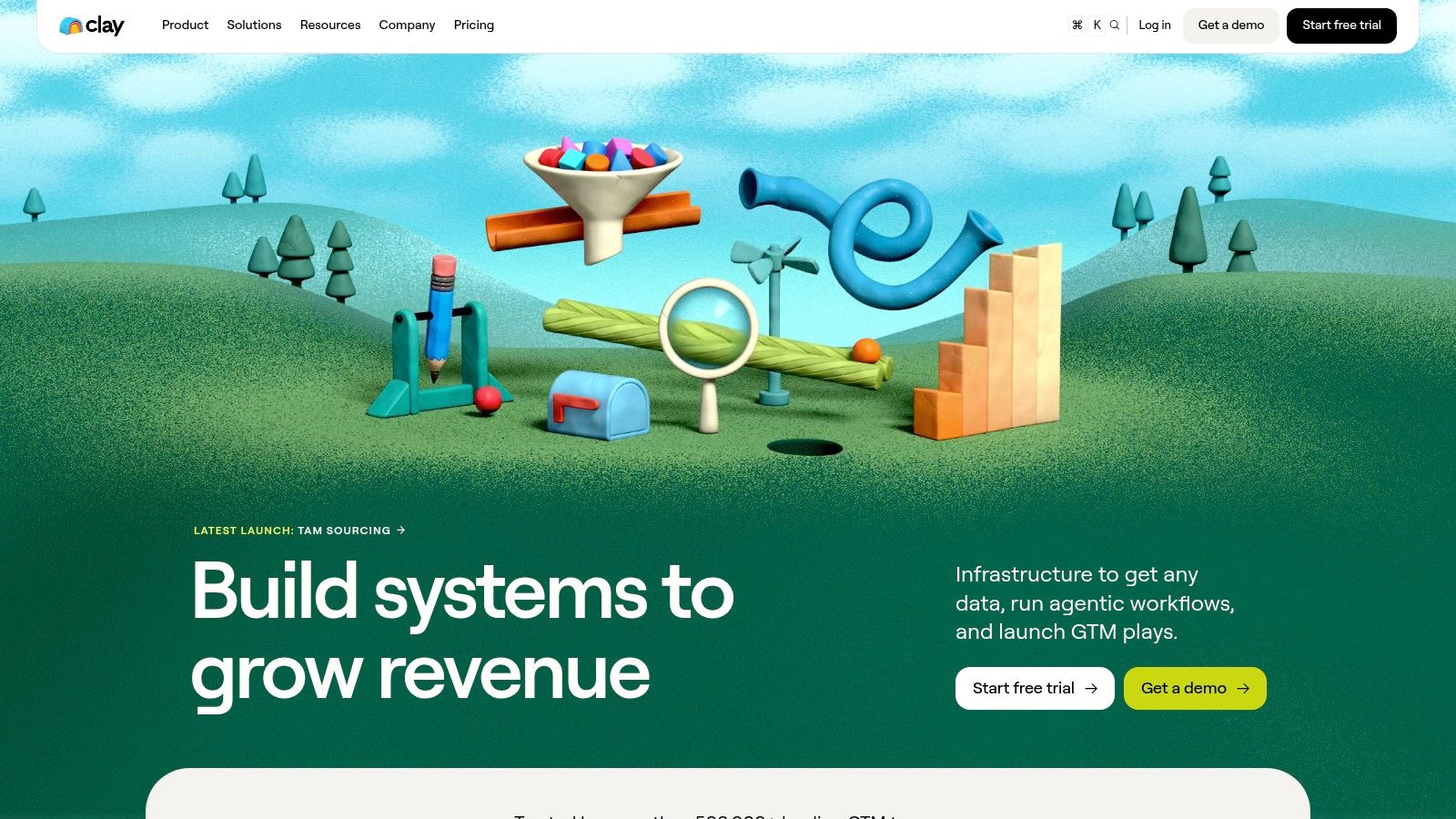
Clay is the GTM engineering tool many teams wish they had earlier. It helps you build prospect lists, enrich them from multiple sources, clean the data, and use AI agents for row-level personalization. For outbound, partner marketing, and sales-assisted motions, it turns manual research into a repeatable workflow.
The biggest value is speed with specificity. Claygent and the broader workflow model let teams generate outreach that reflects company context, recent activity, and better fit signals without making SDRs do hours of manual browsing. That's where the revenue impact shows up, because the team spends less time on research and more time on conversations that matter. It also plugs into CRMs and sequencers, which makes it useful for operators who care about downstream execution rather than just pretty enriched rows.
The downside is the learning curve. Clay rewards power users, and the data and AI credits need active cost governance. If nobody owns the workflow, it can become an expensive sandbox. Used well, though, it becomes one of the highest-value layers in a modern stack.
Clay is strongest when the workflow is already defined. Give it a bad process and it will automate the bad process faster.
This is the tool I'd point to first for GTM engineering. It's a good fit when the team wants to personalize at scale without hiring more SDRs or analysts just to keep up with list building. Website, Clay
8. VWO
VWO is the experimentation platform for teams that need more than a landing page tester. It covers web, server-side, and feature flag experiments, which makes it useful for both marketers and developers. If your conversion work spans page messaging, product behavior, and rollout control, VWO gives you one place to manage the testing layer.
The practical edge is breadth. A/B/n testing, multivariate testing, heatmaps, session replays, and ML-assisted prioritization help teams move from opinions to experiments faster. That matters because most growth teams don't have a shortage of ideas, they have a shortage of tests that launch. VWO supports both no-code and developer-driven work, so it can serve a mixed team without forcing everyone into the same toolchain.
The limitation is organizational. Higher-tier features cost more, and the platform only pays off if the company commits to a real experimentation rhythm. Without ownership, hypotheses, and QA discipline, even the best CRO platform becomes another dashboard. The software can speed up testing, but it can't create the operating habit for you.
Why It Stays In the Stack
- Faster validation: Turn messaging ideas into live experiments.
- Better rollout control: Use server-side testing and feature flags when front-end changes aren't enough.
- Shared visibility: Give marketing and product one place to work from.
For CEOs, CMOs, and CROs, VWO matters because it converts AI-assisted ideas into measurable tests. That is where AI stops being a productivity story and becomes a revenue story. Website, VWO
9. AdCreative.ai
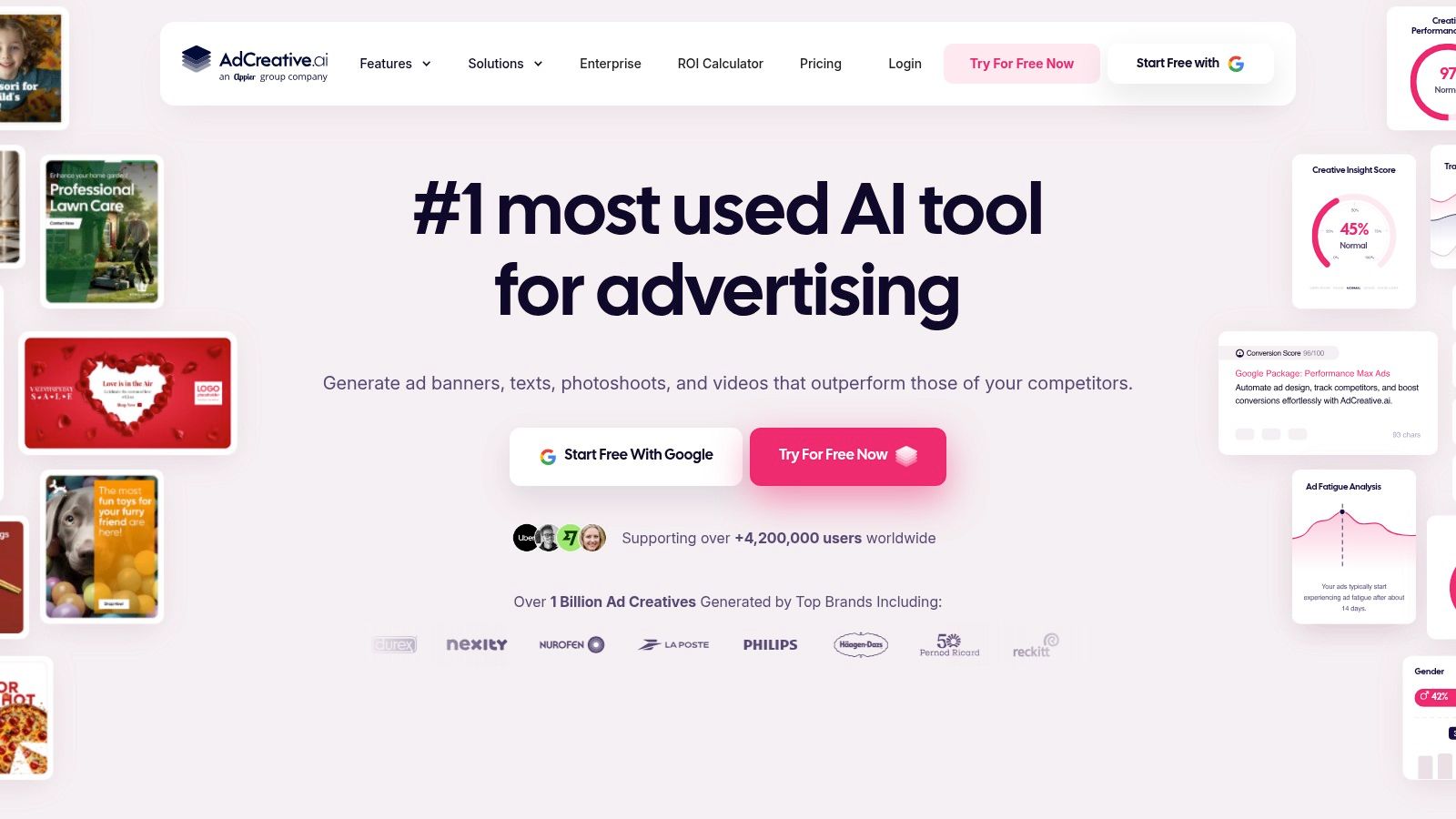
AdCreative.ai is built for paid teams that need variants fast. It generates ad image and video concepts, writes copy frameworks, and scores creatives before spend goes live. That makes it useful for teams that need more testing volume without waiting on design bottlenecks.
The most practical feature is the scoring layer. Creative Scoring AI helps triage which assets deserve media spend, which is important when your budget is tight and your team can't afford to test everything equally. It also includes utilities like background removal, upscaling, and product shoot support, so it can serve as a fast production layer for ad iterations and quick revisions.
The trade-off is creative quality. The output works best when a human gives direction, brand rules, and a clear test plan. If the brief is sloppy, the variants will be sloppy too. Lower plans also come with download or credit limits, so finance and design both need to understand how the tool will be used before rollout.
AdCreative.ai belongs in stacks where paid media has to move faster than the in-house creative queue. It won't replace a strong designer or media strategist, but it will help both of them test more ideas with less friction. Website, AdCreative.ai
10. 6sense
6sense belongs in the stack when pipeline quality matters more than raw lead volume. It is built for account-based marketing, intent, fit, timing, and orchestration, which means it helps teams decide which accounts deserve attention and which plays should fire next. For B2B orgs with a real sales motion, that's a more useful problem than generating more top-of-funnel noise.
The strength is in the predictive model. 6sense helps identify in-market accounts, predict where they are in the buying journey, and connect those signals to marketing and sales actions. That makes it valuable when the team wants tighter alignment between campaign spend, account selection, and revenue outcomes. It's especially strong in mid-market and enterprise ABM programs where account priority can't be left to intuition.
The cost is implementation effort. Premium pricing and the need for disciplined data hygiene mean this is not a casual add-on. If CRM data is messy, routing is inconsistent, or the GTM team can't agree on account definitions, 6sense will surface the mess rather than fix it. Used with clean operations, it becomes a serious revenue layer.
A predictive account platform only works when your data and your sales process are already respectable.
For teams pursuing agent commerce readiness and more advanced buying signals, 6sense is useful because it keeps the focus on account intent rather than vanity metrics. That's exactly the kind of discipline growth-stage B2B teams need as buying behavior shifts. Website, 6sense
AI Marketing Stack, Top 10 Tools Comparison
| Tool | Core features | Target audience | Value / USP | Pricing & considerations |
|---|---|---|---|---|
| HubSpot Marketing Hub + Content/AI (Breeze, Content Hub) | AI content assistant; Breeze agents; CRM-native marketing automation & reporting; Content Hub | SMB to enterprise marketing & sales teams needing a unified CRM+marketing OS | Reduces tool sprawl; native attribution and orchestration; emerging agentic workflows | Tiered hubs/seats; packaging can be complex as you scale |
| Klaviyo | Predictive analytics (churn, CLV); AI segmentation; email + SMS; generative copy/workflows | Ecommerce / DTC brands and lifecycle marketers | Strong revenue-focused predictions; deep ecommerce integrations (Shopify) | Pricing scales with list/profile volume |
| Jasper | Brand voice & style guides; templates; campaign workflows; approvals & collaboration | Marketing teams producing multi-channel campaign content | Marketer-focused UX with governance for on-brand content at scale | Credits/usage hybrid model, monitor usage for cost control |
| Writer | Brand profiles, terminology, enforceable style rules; knowledge ingestion; governance workflows | Enterprise and regulated teams needing strict brand/control | Enterprise-grade governance and security; reduces editing/QA cycles | Custom/enterprise pricing; less out-of-the-box ideation |
| Surfer | Content editor with entity/heading suggestions & scoring; audits; keyword discovery | Content & SEO teams optimizing for search and AI visibility | Actionable on-page optimization scoring non‑SEOs can follow | Plan limits and credit usage; complements full SEO suites |
| Mutiny | No-code personalization editor; AI GTM assistant; CRM & analytics integrations | B2B SaaS, ABM and PLG teams focused on website personalization | Fast, no-code personalization and ABM play execution | Premium pricing; needs traffic and clean segmentation to realize value |
| Clay | Data enrichment & dedupe; AI row-level personalization (Claygent); automation & CRM integrations | GTM engineers, SDR teams, and scalable 1:1 outreach programs | Flexible GTM workflows and hyper-personalized outreach at scale | Power-user learning curve; AI/data credits require governance |
| VWO | A/B/n & MVT testing; session replays & heatmaps; server-side testing & feature flags; AlgoLab AI | CRO teams, product/engineering and marketers running experiments | Mature full‑stack experimentation; supports no-code and developer tests | Enterprise features require higher tiers; needs process discipline |
| AdCreative.ai | AI generation of ad image/video variants & copy; predictive creative scoring; asset utilities | Performance marketing teams and creative ops | Fast concepting and pre-launch creative triage to reduce wasted spend | Download/credit limits on lower plans; best with human creative direction |
| 6sense | Predictive account fit & timing; intent data; account segmentation & orchestration | B2B ABM and enterprise revenue teams | Deep intent and predictive models aligned to pipeline outcomes | Premium pricing and implementation effort; benefits from strong data hygiene |
From Stack to System Your First 90 Days
A tool stack is useless without an operating system. The first 90 days should be about one workflow, one owner, and one metric chain that proves the stack can create revenue, not just activity. If you try to deploy everything at once, you'll end up with more logins and less learning.
Month 1 should be about audit and pilot. Pick one workflow, like personalized outreach in Clay or lifecycle messaging in Klaviyo, and one anchor platform, usually HubSpot. Measure the baseline first, because if you can't describe current performance, you won't know whether the AI workflow helped.
Month 2 should be integrate and train. Connect the pilot tool to CRM and any downstream activation system, then train the team on the exact workflow. Define the KPIs before launch, because tool adoption without measurement is just usage. This is also where the stack needs governance, so brand voice rules, data rules, and review steps are written down instead of living in someone's head.
Month 3 should be scale and govern. If the pilot hits the agreed KPIs, roll it out to adjacent workflows. If it misses, inspect the handoff points, data quality, and human review steps before buying more software. That's where a fractional advisor can save time, and Stimulead fits naturally here if you want a roadmap for CRO, GTM engineering, AI search optimization, and agent commerce readiness.
The best stacks get smaller before they get bigger. Teams cut overlap, tighten baselines, and use AI where the process is repeatable. That's how the stack becomes a revenue engine instead of a budget line. If you want help mapping that operating system to your team, contact Stimulead and ask for a 90-day AI marketing roadmap built around your current CRM, content, and pipeline goals.