
Many organizations buying AI sales prospecting tools still have the wrong target. They optimize for output volume. The better target is pipeline quality. That shift matters because AI adoption in sales has reached 81% of teams that are implementing or experimenting with it in 2026, yet adoption alone doesn't separate winners from everyone else (Autobound's 2026 state of AI sales prospecting). The gap comes from system design. Signal quality, data accuracy, routing logic, and rep adoption decide whether the tool books meetings that close or just creates more noise.
McKinsey's 2025 reporting on AI in sales points to the upside. AI-powered prospecting tools can increase lead generation by 50%, reduce operational costs by up to 60%, and shorten call times by 70% when they automate qualification and follow-up (Cirrus Insight's summary of AI in sales data). I've seen the same pattern in practice. The teams that win treat prospecting as GTM engineering. They connect signals, enrichment, CRM history, and messaging into one repeatable system.
That's the lens for this list. I'm not grading tools on who has the longest feature page. I'm grading them on whether you can build a custom, high-signal outbound motion that improves conversion, rep focus, and revenue. If your team still blurs differences between leads and prospects, fix that first. Then pick the tool that matches your operating model.
Table of Contents
- 1. Apollo.io
- 2. Clay
- 3. Amplemarket
- 4. Reply.io (Jason AI SDR)
- 5. 6sense Revenue AI (Sales Intelligence)
- 6. Cognism
- 7. ZoomInfo SalesOS (+ Engage)
- 8. LeadIQ
- 9. Seamless.AI
- 10. Regie.ai
- Top 10 AI Sales Prospecting Tools Comparison
- Final Thoughts
1. Apollo.io
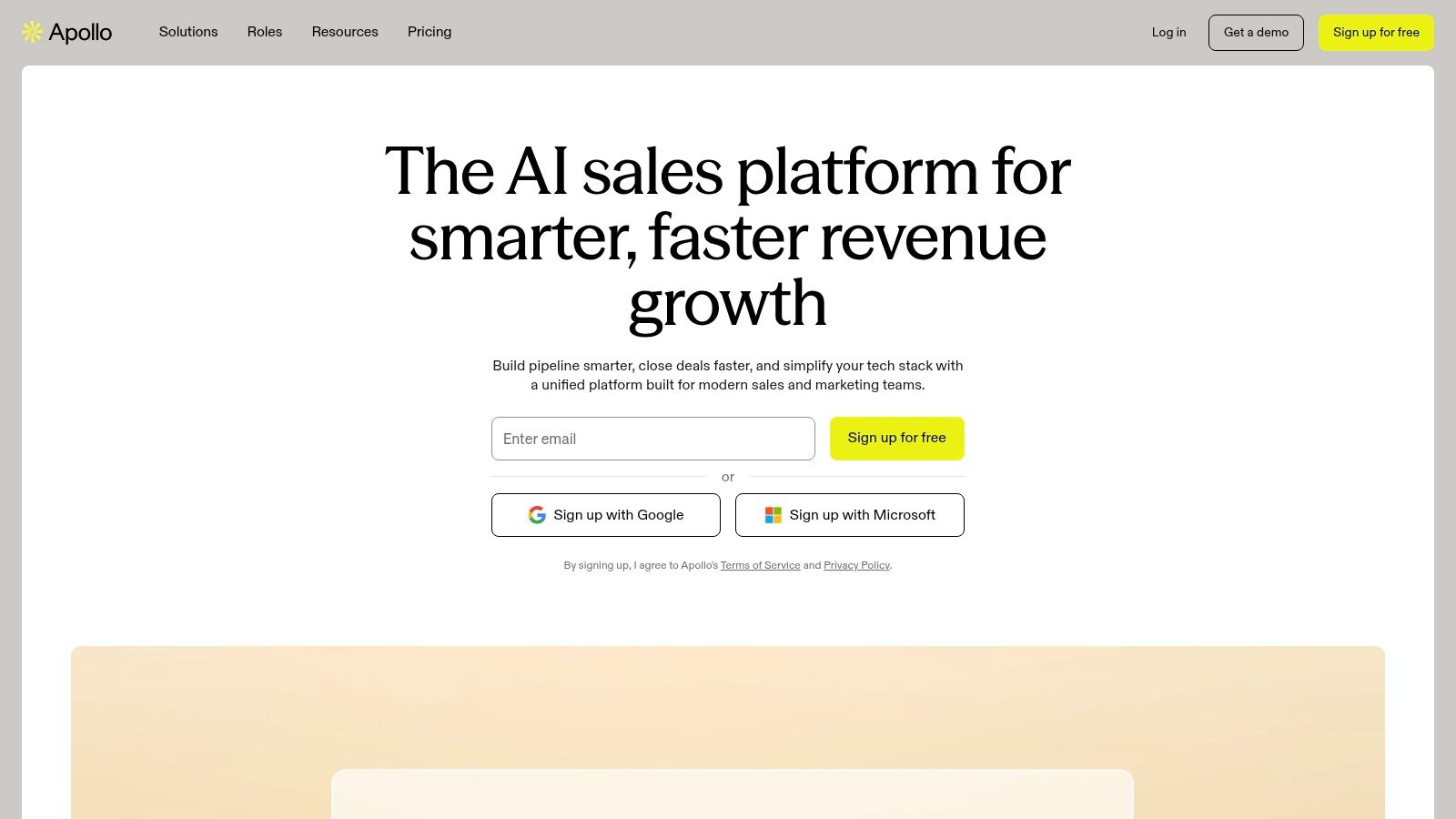
Apollo.io is the tool I point to when a growth-stage team wants one platform that can build lists, enrich contacts, score leads, and run outreach without stitching together a messy stack. That matters for teams of 5 to 50 reps. Setup is fast. The browser extensions are useful. The built-in sequencing keeps early execution simple.
Its core mechanics line up with what good AI prospecting should do: intelligent lead discovery, automated enrichment, and personalized engagement tied to real company context, which Apollo describes in its AI prospecting framework. In plain terms, Apollo can help your reps find who to contact, verify the data, and write a first draft that doesn't read like spam.
Where Apollo fits
Apollo is strongest when you need speed and acceptable complexity. It's a practical option for teams building an outbound engine before moving into heavier GTM engineering.
- Strong all-in-one value: You get database access, sequencing, enrichment, AI research, and extensions in one place.
- Useful waterfall enrichment: Missing phones and emails don't force manual cleanup every time.
- Good programmatic path: API access gives ops teams room to build custom routing and scoring workflows.
The downside is credit management. If you don't watch usage, third-party enrichment can turn into budget drift. Data quality is also good enough for broad prospecting, but I still verify high-stakes target lists before launch.
For teams rebuilding outbound from scratch, Apollo works well alongside a tighter process for outbound B2B lead generation systems.
Practical rule: Use Apollo when simplicity matters more than perfect flexibility.
Start here if you need a reliable base layer. Don't start here if your motion depends on unusual signals, custom enrichment logic, or deep agent workflows.
2. Clay
Clay is the best fit when your team wants to build a prospecting system, not just buy one. I'd choose Clay for GTM teams that care about signal orchestration, enrichment waterfalls, custom scoring, and pushing clean outputs into CRM or engagement platforms. It rewards operators who think in workflows.
That flexibility matters because data quality is where many AI prospecting systems break. The most effective setups use multi-source synthesis across CRM history, social activity, web behavior, and intent signals. Teams also care whether the vendor can keep bounce risk under control, especially when poor contact accuracy can push email bounce rates toward 15% in weak setups, as discussed in Cotera's analysis of AI sales prospecting tools.
Best use case
Clay works best when sales ops, rev ops, or a GTM engineer owns the build.
- Multi-provider enrichment waterfalls: You can route contact discovery through many sources instead of trusting one vendor.
- Claygent research: It's useful for page-level research and niche signals that standard databases miss.
- Low vendor lock-in: You can compose your own system instead of living inside one closed database.
This tool needs a builder mindset. Reps who want a push-button experience may hate it. Finance teams also need someone who understands credit consumption, because flexible systems can hide spend if governance is weak.
I like Clay when the outbound strategy depends on custom triggers. Leadership changes, hiring patterns, category pages, partner listings, and product usage clues are all workable inputs. That makes it especially useful for teams working on GTM engineering and AI-driven personalization instead of generic list pulls.
Clay is where strong operators build a prospecting factory. Weak operators build a science project.
3. Amplemarket
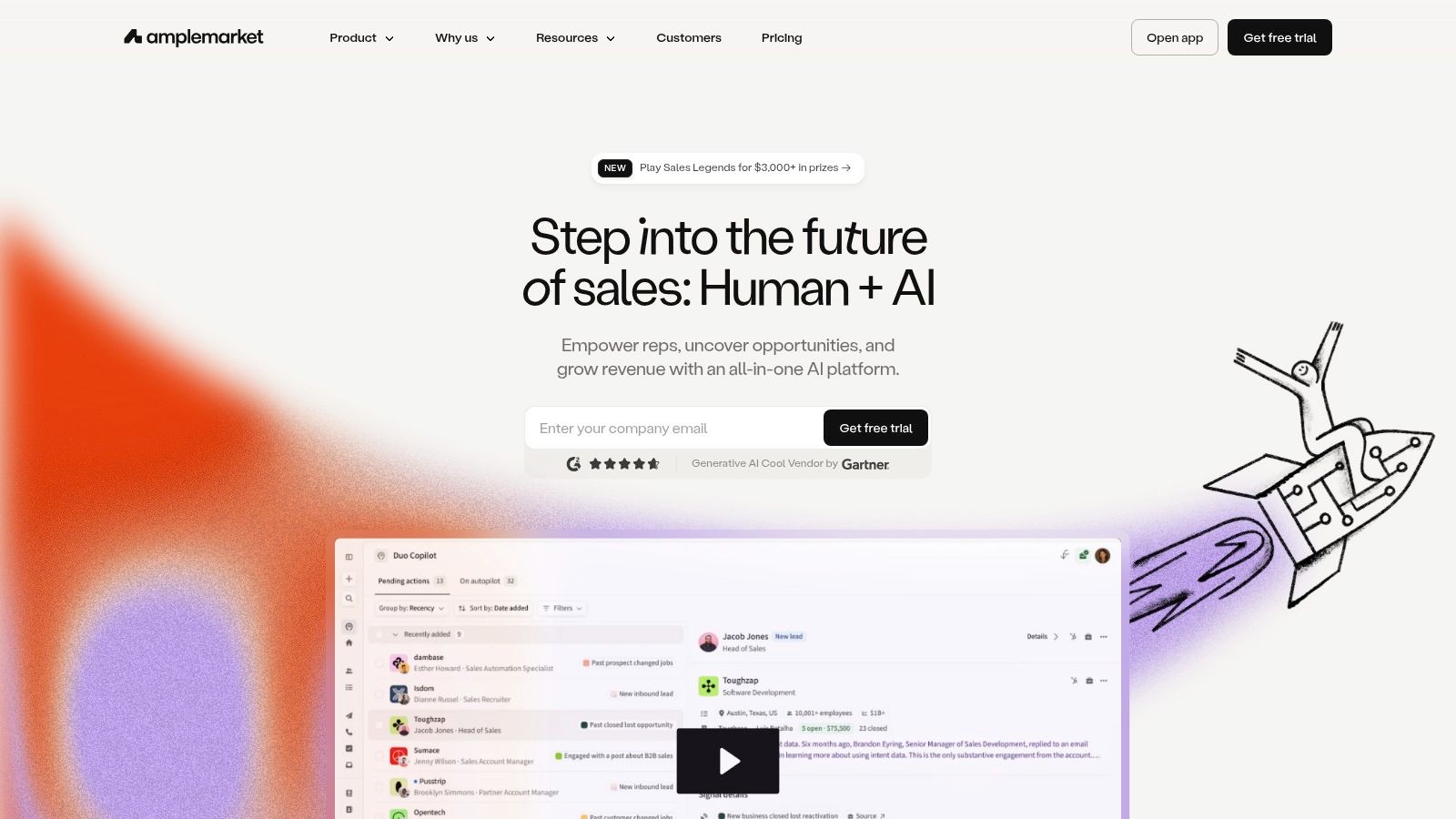
Amplemarket fits teams that want to run prospecting from one operating system and are willing to accept the limits that come with that choice. You get data, sequencing, dialer, intent signals, and deliverability controls in one place. That shortens rollout time. It also reduces the handoff problems that show up when reps prospect in one tool, enrich in another, and send from a third.
For GTM leaders, the question is not whether Amplemarket has enough features. It does. The key question is whether its signal layer is good enough to improve pipeline quality, not just rep activity. In practice, that means checking how well the platform helps your team identify in-market accounts, prioritize the right contacts, and keep outbound infrastructure healthy enough to convert that effort into meetings.
What to watch
Amplemarket works best for teams that value speed to production over deep system customization.
- Unified workflow: Reps can research, build lists, sequence contacts, and call from the same system.
- Built-in deliverability tooling: Warmup and spam checks reduce the need for a separate email infrastructure stack.
- AI assistance inside execution: Duo can help with account research, prioritization, and draft generation without forcing reps into a separate interface.
That convenience has a cost. Closed systems are easier to launch and harder to bend around a specialized outbound motion. If your team wins by building custom trigger logic across product usage, hiring changes, partner ecosystems, and niche firmographic rules, Amplemarket will feel narrower than a tool like Clay. If your team wins by enforcing a standard process across 10 to 40 reps, the trade-off can be worth it.
I would also review reply drafting carefully. AI can handle first-touch copy and simple follow-ups. It is much less reliable in live deal context, objection handling, or competitive threads where one weak message can lower reply quality. Teams working on AI email personalization and campaign control usually get better results when they set approval rules for sensitive stages instead of letting drafts ship untouched.
Amplemarket is a good fit when the bottleneck is operational sprawl. It is a weaker fit when the problem sits upstream in ICP definition, poor account selection, or weak signal design. Those problems do not disappear inside an all-in-one platform.
4. Reply.io (Jason AI SDR)
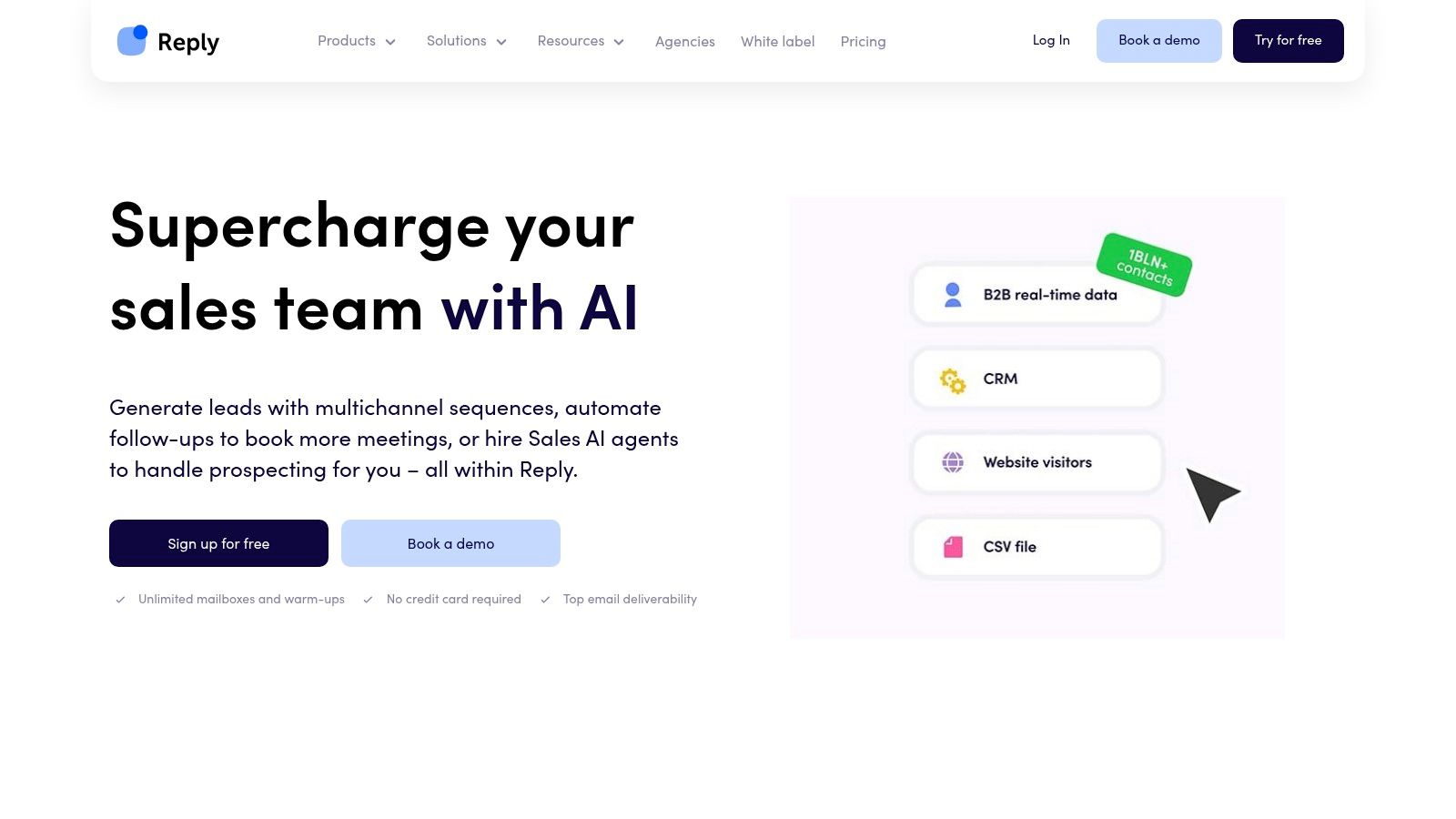
If you want to experiment with agent-style outbound without giving full control to a black box, Reply.io is a practical option. Jason AI SDR gives teams autopilot and co-pilot modes, which is the right compromise for most growth-stage companies. You can automate a lot, but keep approval gates where they matter.
That guardrail matters because rollout failure is often the underlying problem. Sales leaders may expect AI to improve prospecting, yet the average sales tool adoption rate is only 30%, and failed rollouts usually come from implementation, not product capability, according to SalesMotion's perspective on AI prospecting tool adoption. Reply's approval mode fits that reality better than a fully autonomous promise.
Where it works
Reply is strongest for teams testing AI SDR workflows while keeping human review in place.
- Approval-based AI control: Reps can review drafts before sequences go live.
- Multichannel automation: Email, phone, and social touchpoints stay in one system.
- Flexible packaging: Active-contact based tiers can work for teams with variable campaign volume.
I wouldn't hand nuanced inbox conversations to AI without QA. That's still where teams get sloppy. But for first-touch personalization and sequence management, Reply can save real time if the playbooks are tight.
The tool also pairs well with teams refining AI-driven lifecycle messaging and AI for email marketing workflows. If your growth team already has message standards, brand voice rules, and escalation paths, Reply becomes much easier to trust.
Operator note: Approval mode speeds adoption because reps keep agency.
5. 6sense Revenue AI (Sales Intelligence)
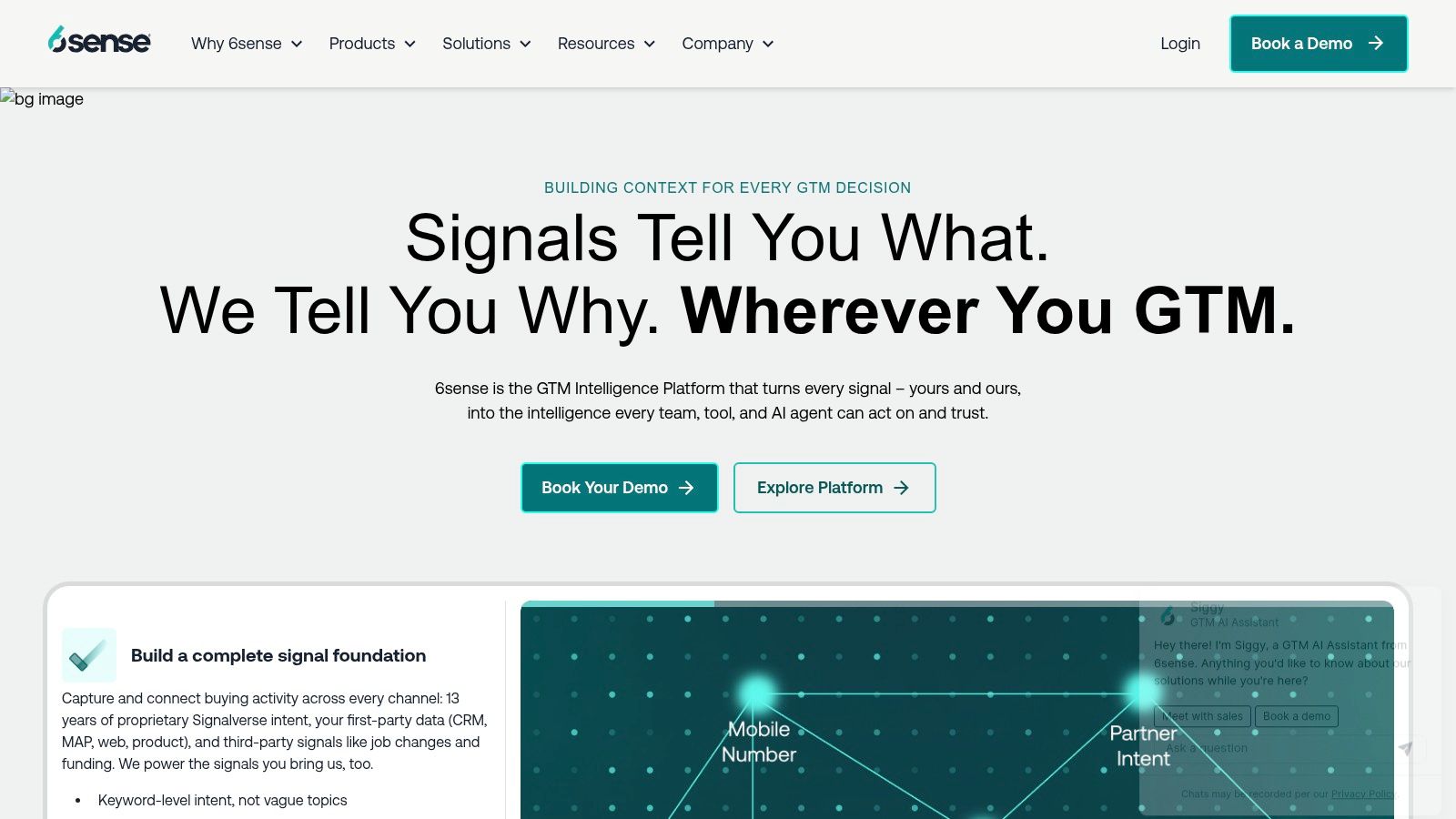
6sense is for companies that care more about account selection than rep-level list building. That distinction matters. If your market is crowded and your TAM is large, picking the right accounts often creates more pipeline lift than writing slightly better emails.
I'd use 6sense when an account-based motion already exists or needs to exist. The platform is built around predictive fit, stage scoring, and in-market account detection. It's heavier to deploy than point tools, but that's the trade. You're buying a targeting layer for the revenue engine.
Best for account selection
Teams using AI-driven prospecting effectively can increase pipeline by 10% to 25% when the rollout starts with defined success metrics, according to Outreach's guide to AI for sales prospecting. 6sense fits that model well because it forces you to think in account progression, not just outbound volume.
What I like:
- High-signal account targeting: Sellers spend less time on low-probability accounts.
- Enterprise governance: Good fit for larger buying committees and controlled processes.
- Deep integration potential: Useful for teams tying marketing, SDR, and AE workflows together.
What slows teams down:
- Sales-led scoping: Packaging takes work. Budgeting takes work too.
- Heavier implementation: You need rev ops muscle and clear ownership.
6sense is rarely the first AI prospecting tool I'd buy at a smaller company. It becomes more attractive once marketing, SDR, and sales are already aligned on account strategy.
6. Cognism
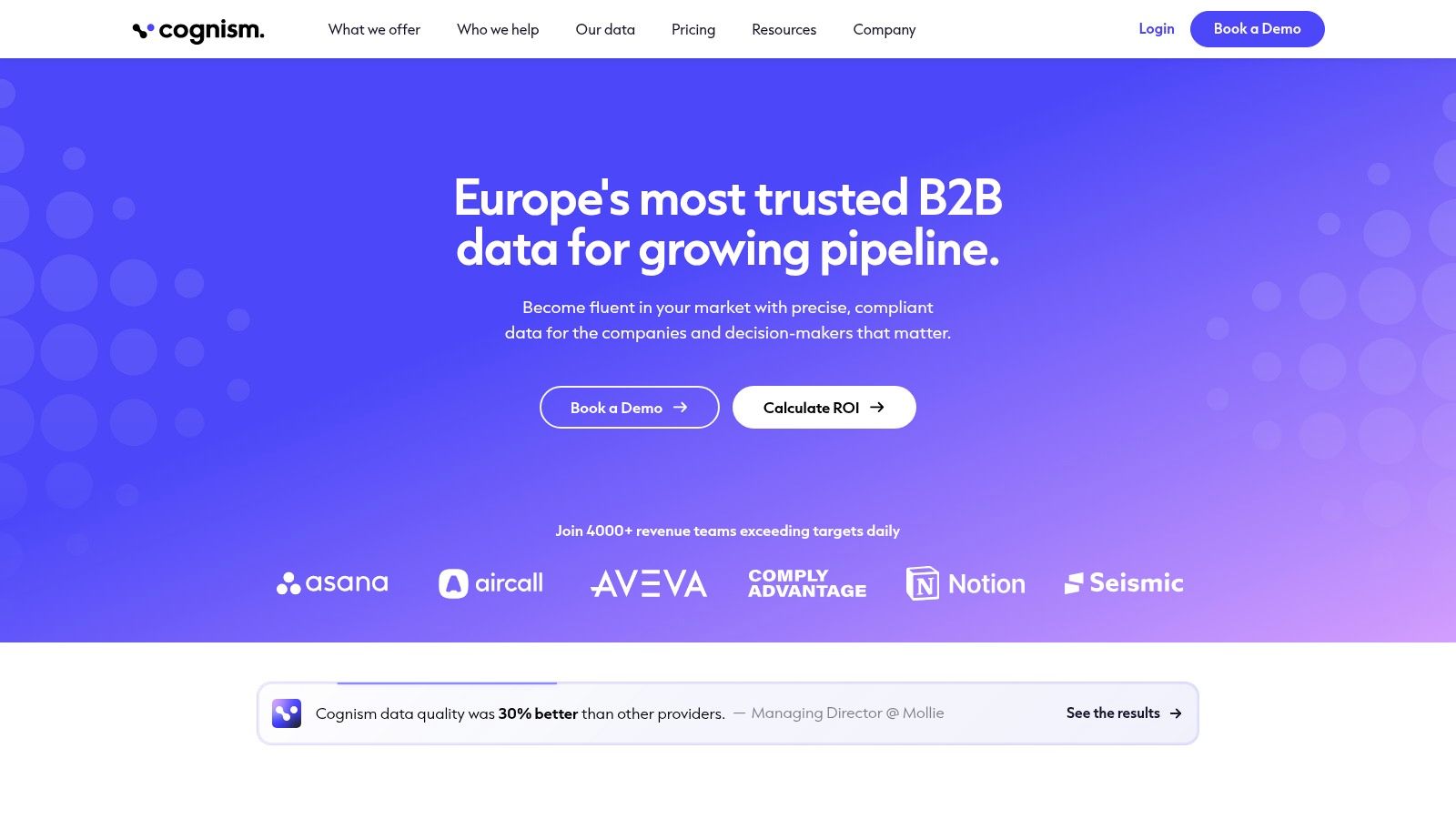
Cognism solves a narrower problem than some of the broader platforms here. That's a good thing. If your outbound motion depends on accurate mobile numbers, strong EMEA coverage, and compliance controls, it deserves a serious look. For many teams, direct dial quality matters more than one more AI writing feature.
Leaders should get practical. If reps can't reach the right people, none of the personalization work matters. Teams adopting AI-powered sales prospecting software report up to a 50% increase in lead volume and 40% to 60% cost reduction, with lead quality gains often visible within 30 to 60 days, according to Copy.ai's review of sales prospecting tools. But that kind of result depends on contact data that reps can use.
Why teams buy it
Cognism is best when phone-first outbound still drives pipeline.
- Phone-verified data: Diamond Data is the main draw.
- Compliance posture: GDPR, CCPA, and DNC cross-checks matter for regulated teams.
- Useful browser workflows: Reps can research and capture contacts without a huge process change.
The trade-off is packaging. Premium access sits higher up the commercial ladder, and pricing isn't transparent. You also need to pair the data with strong rep enablement. A better phone number doesn't help a weak opener.
For organizations tightening sales process and rep execution, Cognism fits naturally with stronger sales enablement best practices. It's a data tool, but the revenue outcome still comes from behavior.
7. ZoomInfo SalesOS (+ Engage)
ZoomInfo is still the default shortlist tool for many larger teams because of dataset breadth and enterprise credibility. If procurement wants a familiar vendor and leadership wants a broad intelligence layer, ZoomInfo often survives the first cut. It can cover a lot of ground.
Its value is strongest when a company wants one large vendor across contact data, company intelligence, engagement, and adjacent modules. That can reduce coordination overhead for big teams. It can also create a bloated contract if your use case is narrower than the package.
The real trade-off
I treat ZoomInfo as a scale play. It's less interesting for experimentation. It's more useful when you already know your sales process, coverage model, governance rules, and procurement path.
What works well:
- Broad dataset: Useful for teams covering many segments and regions.
- Mature ecosystem: Security, procurement, and admin functions are familiar to enterprise buyers.
- Suite expansion: SalesOS, Engage, Intent, and other modules can centralize stack decisions.
What to watch:
- Opaque pricing: Budgeting takes negotiation.
- Engage isn't always best-of-breed: Some teams still prefer a separate engagement layer.
If you buy ZoomInfo, define the exact jobs it owns. Otherwise reps will keep using side tools, rev ops will keep exporting lists, and the contract will outgrow the actual workflow.
8. LeadIQ
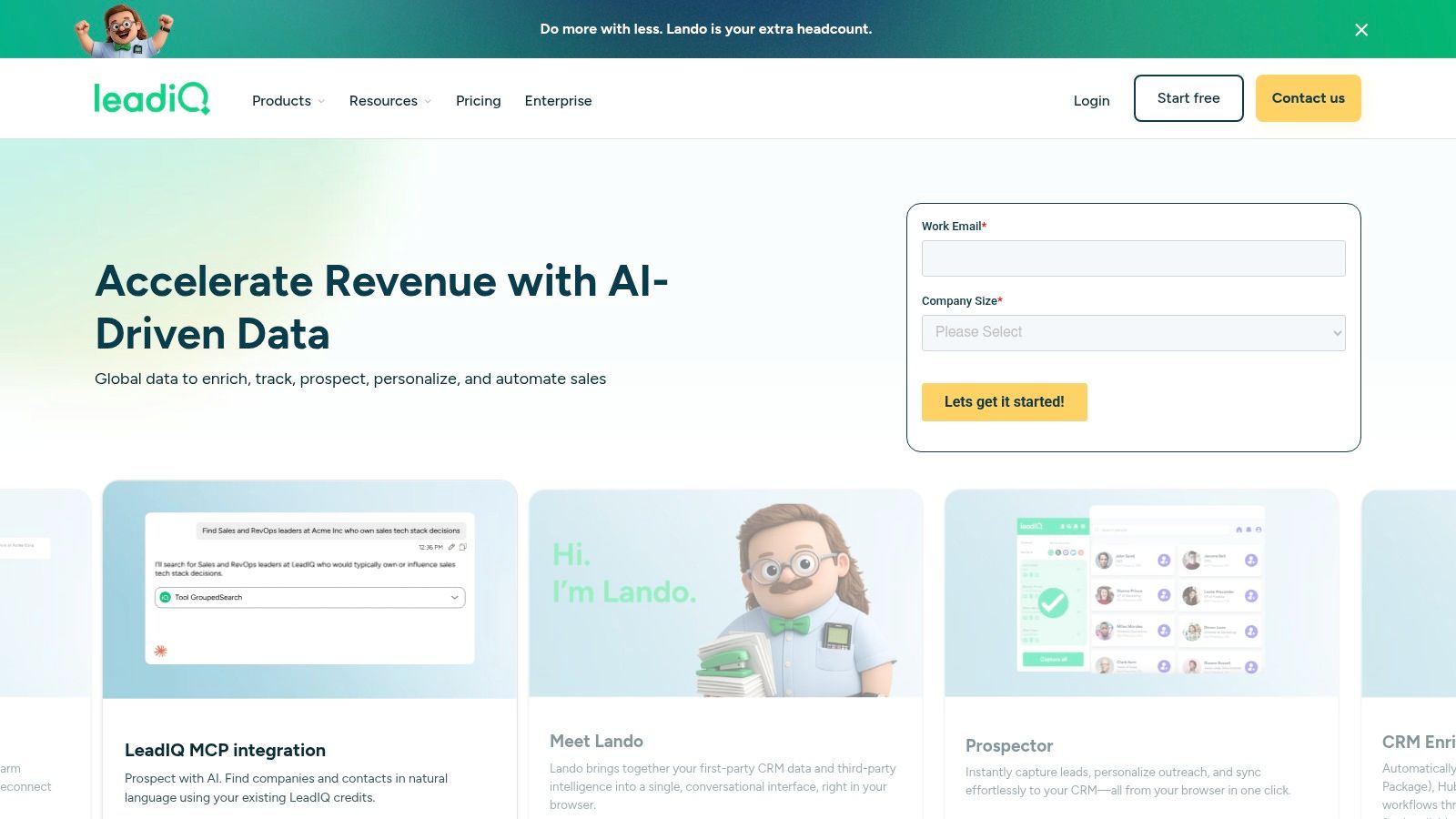
LeadIQ is a speed tool. Reps use it when they want to capture a contact from LinkedIn, pull data quickly, and move into outreach without much friction. That makes it attractive for lean teams that need top-of-funnel motion now, not a six-week systems build.
I like LeadIQ for companies where reps still source part of their own pipeline. The UI is straightforward. The pricing is easier to understand than many competitors. Job-change signals also make it useful for territory-based follow-up and expansion plays.
Best for rep speed
LeadIQ works best when the team values fast capture and simple workflows over deep orchestration.
- Easy Chrome workflows: Good for reps living in LinkedIn and Sales Navigator.
- AI message writing: Helpful for first drafts when speed matters.
- Clear credit logic: Leaders can usually forecast usage without a spreadsheet war.
The limitation is scope. If your ICP is hard to reach or your motion needs layered intent, account scoring, and custom routing, LeadIQ may end up as one component inside a broader stack. That's fine. Not every tool needs to be the operating system.
For founder-led sales, small SDR pods, and teams proving a market segment, LeadIQ is often enough to keep prospecting moving.
9. Seamless.AI
API access changes how I evaluate this platform.
For GTM teams building custom prospecting systems, that matters more than a polished rep UI. You can push contact data into your own routing logic, enrich records before they hit sequences, and support rep workflows with internal tools instead of forcing everyone into one vendor workflow.
That setup can improve pipeline quality if the team has the ops muscle to support it. Companies using AI for lead sourcing, email drafting, and automated follow-ups have seen lower customer acquisition costs and more sales-ready leads in documented deployments, according to Overloop's review of AI sales tool ROI. In practice, those gains come from system design, QA, and routing discipline, not from buying a database alone.
Best for builder-led outbound
This tool fits teams that want prospect data inside custom automations and internal GTM infrastructure.
- API access across plans: Useful for teams that do not want to wait for enterprise packaging before building.
- Enough enrichment for custom workflows: Works for lead pulls, list building, and outbound triggers tied to your own logic.
- Frequent product changes: Better for operators who can test, adapt, and update processes quickly.
The primary trade-off is operational discipline. Contract terms need close review. Coverage and accuracy need testing against your ICP, territories, and persona mix before broader rollout.
I would run a controlled sample. Measure valid emails, direct dials, duplicate rates, connect rates, and meetings booked by segment. If the data holds up, this can become a useful data layer inside a custom prospecting system. If not, it stays a point solution instead of a core part of the stack.
10. Regie.ai
Regie.ai makes the strongest case when the goal is not more outbound activity. The goal is more qualified coverage per rep, with tighter control over who gets touched, what gets sent, and how fast teams learn from reply data.
The product brings prospect discovery, prioritization, sequencing, dialer workflows, research support, and data enrichment into one system. That matters for GTM teams that want to reduce handoffs between list building, messaging, and execution. Fewer tools can mean faster iteration. It can also mean more vendor lock-in if the workflow becomes too Regie-specific.
Who should buy it
Regie fits teams that already have a defined outbound motion and now need to increase throughput without letting targeting quality slip. I would look at it as an orchestration layer for AI-assisted prospecting, not just a sequencing tool.
- One operating surface for outbound: Useful for teams that want sourcing, research, and execution connected in the same workflow.
- AI support across rep tasks: Helps reps spend less time on manual account research and first-draft message creation.
- Better fit for scaled teams than early-stage teams: The value shows up when manager inspection, QA, and process discipline already exist.
The trade-off is control versus flexibility. An all-in-one workflow can speed up execution, but it can also limit how much ops teams customize scoring, routing, enrichment logic, or experimentation compared with a more composable stack. Teams with strong RevOps and GTM engineering talent should test whether Regie's native workflow matches their process or forces compromises.
Adoption risk is real. If reps do not trust the account picks, the personalization, or the reply handling, they will bypass the system. That kills data quality and makes performance hard to diagnose.
I would run a staged rollout. Measure acceptance rate on AI-suggested accounts, reply quality, meetings booked, meeting-to-opportunity conversion, and pipeline created per rep. If those numbers improve without a drop in target-account quality, Regie can extend rep capacity in a way that shows up in revenue, not just send volume.
Top 10 AI Sales Prospecting Tools Comparison
| Product | Core features | Target audience | Unique selling points | Pricing / Cost notes |
|---|---|---|---|---|
| Apollo.io | Large B2B contact DB; sequencing & deliverability; AI research & lead scoring; waterfall enrichment & browser extensions | SMB / mid‑market teams wanting a single outbound tool | Excellent price-to-capability; fast setup; waterfall enrichment reduces manual work | Low per‑seat; credit‑based enrichment, monitor third‑party costs |
| Clay | Multi‑source prospect sourcing; 150+ provider enrichment waterfalls; Claygent AI agents; CRM/webhooks | Teams building custom prospecting systems (builders) | Best‑in‑class flexibility; composable data sources; reduces vendor lock‑in | Free list building; credits for enrichment; data spend can vary |
| Amplemarket | AI‑verified B2B DB & intent; multichannel sequences & native dialer; deliverability suite; Duo AI copilots | Teams wanting one contract for modern outbound + deliverability | Consolidates data, signals, sequencing and deliverability; strong onboarding/CSM | Premium vs point tools; usage‑based inclusions (emails/phones/year) |
| Reply.io (Jason AI SDR) | Jason AI SDR (autopilot/co‑pilot); multichannel automation; intent signals; warmups | Teams experimenting with agent‑style outbound with human control | Pragmatic AI approval modes; flexible tiers by active contacts | Cost scales with active contacts; plan sizing matters |
| 6sense Revenue AI | ABM, intent & predictive platform; account fit & stage scoring; sales intelligence + AI email | Data‑driven mid‑market & enterprise ABM teams | High‑signal account targeting; deep integrations and enterprise governance | Enterprise, sales‑led pricing; heavier implementation |
| Cognism | Phone‑verified "Diamond" contacts; LinkedIn/web extension; CRM enrichment; compliance features | Teams prioritizing direct‑dial accuracy and EMEA compliance | Higher mobile connect rates; compliance‑first (GDPR/DNC) | Diamond access on premium packages; sales‑led pricing |
| ZoomInfo SalesOS (+ Engage) | Broad company/contact database; Engage sequences & dialer; intent/Scoops; emerging Copilot | Large sales teams wanting breadth of data & enterprise controls | Deep dataset and mature ecosystem; centralizes tooling for big teams | Opaque, typically high pricing; annual negotiated contracts |
| LeadIQ | Chrome capture from LinkedIn/Sales Nav; AI outbound message writer; job‑change signals; clear credit logic | Reps and teams needing fast capture and transparent pricing | Generous free tier; transparent pricing; simple capture workflows | Transparent plans; generous free credits (e.g., 50 free) |
| Seamless.AI | Prospecting & enrichment; Connect workflows; job‑change signals; public API on all plans | Teams wanting programmatic/API access for agents and automations | API‑first model; easy to plug into custom automations; active release cadence | Review annual terms; validate coverage vs your ICP |
| Regie.ai | AI‑orchestrated discovery + engagement; 220M+ contacts via bundled sources; dialer, mailbox rotation & agents | Scaling teams seeking agentic discovery with built‑in sequencing | Credits‑included bundles reduce separate vendor contracts; agentic discovery | Higher seat minimums; bundled pricing; agent outputs need human QA |
Final Thoughts
AI prospecting tools create value only when they improve pipeline quality. More output is not the goal. Better opportunities are.
The right buying question is operational. Which constraint is holding back pipeline creation right now. Data coverage. Signal quality. Contact accuracy. Sequence execution. Rep adoption. Routing. The answer should determine the tool, not the other way around.
The category splits pretty cleanly once you evaluate it through a GTM engineering lens. Apollo.io and Amplemarket fit teams that need speed and broad execution in one system. Clay fits teams building custom workflows around niche signals, enrichment logic, and scoring rules. 6sense fits orgs that prioritize account selection and buying-stage visibility. Cognism fits teams where mobile accuracy and compliance affect conversion. Reply.io and Regie.ai fit teams testing agent-assisted outbound with human review still in place. LeadIQ fits rep-driven capture workflows. A specific platform fits teams that want API access and tighter automation control.
Run the evaluation on revenue math, not feature density. Track list-to-meeting rate, meeting-to-opportunity rate, positive reply rate, bounce rate, data match rate into CRM, rep usage after week two, and time-to-first-qualified-pipeline. Time saved matters only if it turns into more qualified conversations and cleaner progression through the funnel.
This is also where leadership teams make expensive mistakes. They buy an AI SDR before they fix ICP definition. They add enrichment before they clean routing and ownership rules. They automate copy before they know which pain points produce meetings in each segment. The tool gets blamed. The system was the problem.
Stimulead works in that broader operating lane. The focus is not just outbound volume. It is the setup around AI-driven revenue workflows, including GTM engineering, CRM hygiene, conversion paths, and AI visibility that affects how prospects discover and evaluate your company.
Keep the next step simple. Pick two tools. Test them for 30 days on the same segment, with the same offer, the same rep cohort, and the same success criteria. Then compare meeting quality, opportunity creation, and pipeline progression. If you want extra context on what efficient revenue teams watch, spend a few minutes with these blog posts on sales efficiency. Make the call based on revenue behavior, not demo polish.