
The popular advice is wrong: AI powered personalization doesn't stall because the model needs more sophistication. It stalls because nobody owns the operating system around the model. A recommendation engine can produce a promising first test, then lose its value when data goes stale, consent records disappear, content changes without taxonomy updates, and RevOps can't act on the score.
For growth-stage B2B companies, the decision is whether personalization becomes a repeatable revenue process or another interface feature that looks intelligent in a vendor demo. We've implemented these systems with marketing, sales, data, and product teams. The compounding lift comes from sequencing, governance, control groups, and fast operational follow-through. The model is only one component.
Table of Contents
- Why Most AI Personalization Stalls After the First Pilot
- Where the Revenue Lift Lands in 2026
- The Four Operating Pillars That Decide Outcome
- Build, Buy, or Hybrid and How to Choose
- Where AI Personalization Quietly Fails
- Governance and Trust Before You Scale
- Your First 30 Days After Reading This
Why Most AI Personalization Stalls After the First Pilot
Many teams buy AI personalization as if the central question were, “Which model should we use?” That question comes too early. The key questions are operational: Who owns the customer profile? Who approves a new propensity score? Which team updates the content taxonomy? How quickly can marketing, product, and sales ship a coordinated change?
A vendor can demonstrate a strong first experiment because the initial audience is often clean, the use case is narrow, and the team is watching the result closely. Six months later, signal quality may have degraded, product categories may have changed, and the model may still be sending recommendations into a workflow nobody maintains.
The operating model is the durable advantage
The market itself shows that this is now an infrastructure decision. MarketsandMarkets estimates the AI personalization market at USD 5.45 billion in 2025 and projects it to reach USD 41.6 billion by 2032, with a 34% CAGR from 2026 to 2032. That scale means personalization is moving across content, offers, timing, and channel selection throughout the buyer journey.
The investment is rational, but tool adoption alone won't produce durable results. PwC's cited assessment of personalization execution describes a familiar problem: technology exists without integration, data exists without action, teams are committed without coordination, and measurement doesn't guide decisions.
Practical rule: Treat the algorithm as replaceable. Treat ownership, data contracts, experimentation, and orchestration as company infrastructure.
At Stimulead, we see the same pattern in client engagements. Teams often have enough software to personalize a page. They lack a named owner who can resolve conflicts between the CRM, CDP, analytics layer, and sales workflow. That gap turns a promising pilot into a maintenance burden.
What compounds after the pilot
A compounding program has a standing control group, a documented decision log, a content taxonomy that someone maintains, and a weekly review of signal quality. It also has a clear answer to what happens after a score changes. If a high-intent account receives a score of “high,” a sales task, email suppression, next-best action, or service intervention should follow.
Without that handoff, personalization creates insight without action. The organization then blames the model for a workflow failure.
Where the Revenue Lift Lands in 2026
For B2B companies, the useful benchmark is movement in your own funnel, measured at the surface where a buyer makes a decision. Vendor studies can establish direction, but your revenue team still needs a control, a defined denominator, and a readout tied to pipeline or completed purchase.
Gartner reports that customers were 10% more likely to complete a purchase and twice as likely to buy more than originally intended when digital interactions were personalized, as summarized by Contentstack's report on Gartner's B2B personalization findings. The commercial signal is purchase progression and expansion intent, not a superficial engagement metric.
The strongest B2B use cases sit close to a decision. A pricing page can adapt proof points to the account's stated use case. A sales follow-up can reflect the last meeting context. An onboarding flow can prioritize the next action that removes a known adoption barrier. Personalization earns its place when it changes what the buyer sees or what the team does.
A practical view of where lift appears
| Surface | Channel | Typical lift range | Where the lift concentrates |
|---|---|---|---|
| Product and offer recommendations | E-commerce site | 19% higher click-through rate in one study | Product discovery and ranking |
| New-customer recommendations | E-commerce site | 14% higher add-to-cart rate in one study | Early browsing and product fit |
| Returning-customer recommendations | E-commerce site | 11% higher add-to-cart rate in one study | Known preferences and repeat purchase |
| Order completion | E-commerce site | 14% higher in one study | Cart and checkout progression |
| Broad site conversion | E-commerce site | 18% year-over-year gain for extensive AI personalization versus 8% for minimal personalization in one study | Dynamic interest modeling across the site |
| B2B digital buying journey | Website and digital interactions | 10% higher purchase completion likelihood | Decision-stage interactions |
| B2B expansion behavior | Digital buying journey | Twice as likely to buy more than intended | Relevant recommendations and context |
The e-commerce figures come from the IJSR study of personalized recommendation systems. Do not copy them into a B2B forecast. They show where signal quality tends to be strongest: a visitor takes an observable action, the system updates an interest model, and the recommendation appears near a purchase decision.
Why lifecycle and account programs behave differently
Email and sales follow-up often have cleaner identity and intent signals than anonymous web traffic. A known contact has a company, interaction history, stage, and recent activity. That makes it easier to suppress irrelevant messages and select a useful next action.
Web personalization can matter on pricing, product, and conversion pages. It also decays quickly when content changes faster than the model's labels, or when visitors move between devices and sessions without reliable identity resolution.
Measure revenue per visitor, pipeline created, opportunity progression, and expansion separately from clicks and time on page. If the personalized experience does not move a commercial outcome, the team is funding theater rather than a revenue system.
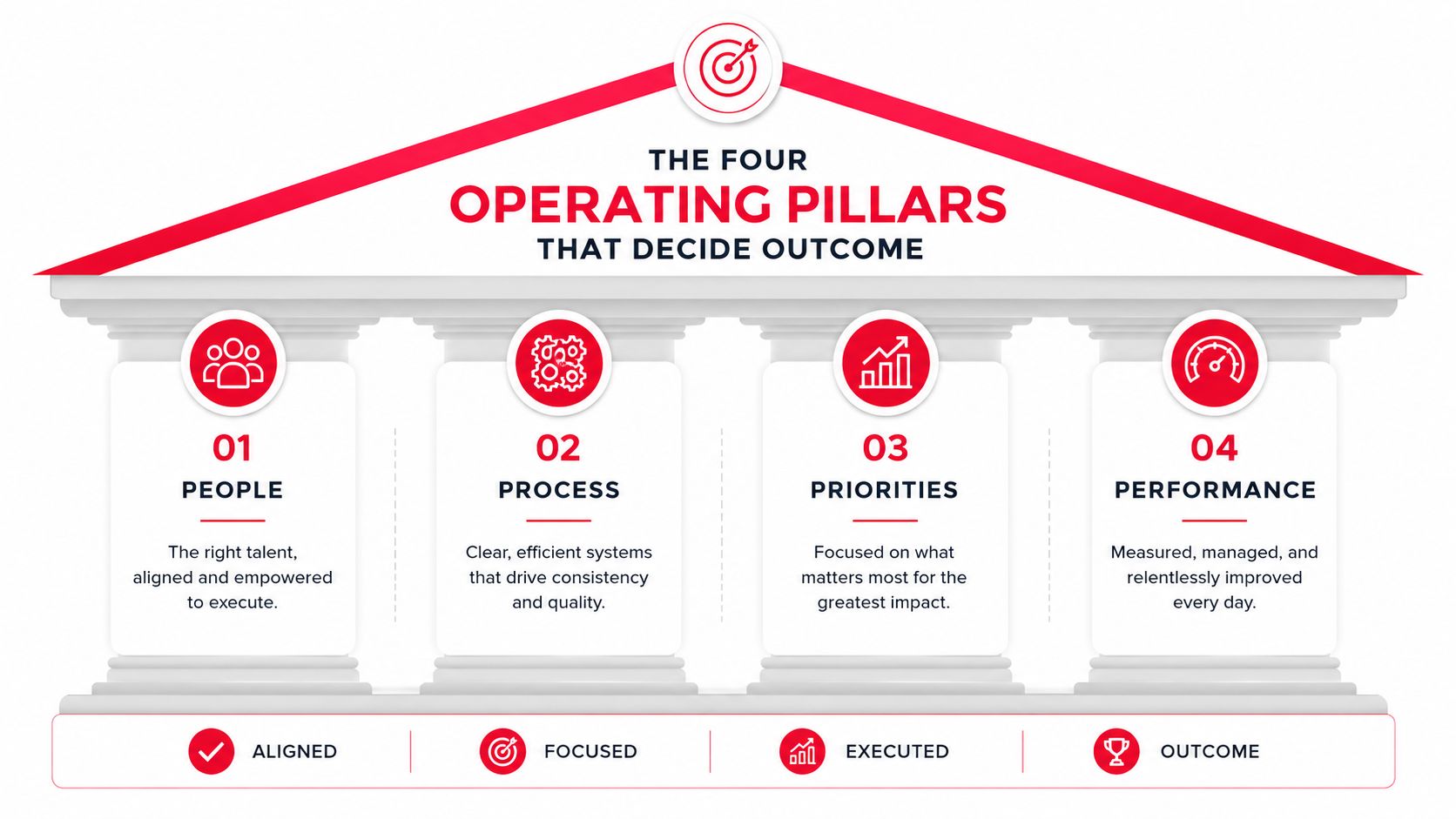
The Four Operating Pillars That Decide Outcome
A working program needs four connected pillars: data readiness, model selection, experimentation, and orchestration. Treat them as an operating model. Weakness in one pillar limits the return from the others, regardless of model quality.
Data readiness comes before model selection
Customer profiles need fresh event-level data, consent states attached to relevant fields, and an accessible feature layer. Marketing and data science should use compatible definitions for account stage, product interest, opportunity status, and customer health.
Audit collection methods before adding more tracking. Teams using external sources should review risks in data collection, with particular attention to provenance, permission, and retention rules that govern activation.
Adobe's B2B personalisation research for Asia-Pacific puts data quality and responsible data use at the center of effective AI-powered personalisation. A smaller set of trusted, permissioned first-party signals usually beats a larger profile assembled from inconsistent sources.
Match model complexity to signal volume
A gradient-boosted propensity model trained on clean first-party data can outperform a fine-tuned language model for many B2B scoring tasks. Start with the simplest model that supports the decision, then add complexity only when testing shows a business reason.
Language models suit classification, summarization, content assembly, and context extraction. They should support a defined event model and reliable scoring pipeline, not replace either one.
Make experimentation permanent
Every personalization change needs a control. Use a permanent holdout where appropriate, register the primary metric before launch, and set the stopping rule in advance. A change without a control produces a story, not evidence.
The PersonaLens benchmark evaluates whether a system adapts to the user rather than merely producing language that sounds personal. Its benchmark approach is a useful technical reference for conversational systems, but treat its evaluation as evidence about measured adaptation, not proof of commercial impact.
Orchestration is the pillar teams skip
A high-propensity account should not receive a generic nurture email soon after a sales representative logs a meeting. A churn signal should reach a customer success workflow with a defined playbook and available capacity.
Orchestration requires one source of truth across marketing, sales, product, and service. AI website personalization guidance emphasizes revenue-driving surfaces because teams learn faster when they start where buyers already make decisions.
Assign ownership clearly:
- Data steward, accountable for definitions, freshness, and consent fields.
- Personalization lead, accountable for business outcomes and prioritization.
- Experimentation owner, accountable for controls, metrics, and readouts.
- RevOps owner, accountable for routing scores into action.
A new model cannot repair an unowned handoff. The operating model determines whether a useful prediction reaches the right team, channel, and moment.
Build, Buy, or Hybrid and How to Choose
The right posture depends on how much control your company needs and how quickly it must produce evidence. A board-level decision should make the tradeoff visible instead of hiding it inside a vendor evaluation.
| Dimension | Build | Buy | Hybrid |
|---|---|---|---|
| Cost profile | Highest and least predictable | More predictable subscription and implementation spend | Mid-range, split across platform and internal work |
| Time to first experiment | Slowest | Fastest | Moderate |
| Model transparency | Highest control | Depends on vendor access | Control over strategic scores, vendor support for delivery |
| Integration risk | High, because the team owns every connection | Moderate, with vendor constraints | Moderate, with fewer critical dependencies |
| Lock-in | Lower platform lock-in, higher internal dependency | Highest vendor dependency | Manageable if interfaces and data ownership stay internal |
| Best fit | High-volume data, specialized decisions, strong data engineering | Clear use case, urgent deployment, limited internal capacity | Growth-stage team needing control without building everything |
Build
A custom system can use your data lake, warehouse, feature store, and internal decision rules. It gives the data team control over features, thresholds, evaluation, and deployment, but it also makes the company responsible for monitoring, incident response, consent enforcement, and maintenance.
Pure build makes sense when personalization is a strategic product capability or when the decision logic is too specific for a general platform. It's a poor default for a mid-market team that hasn't proven a single high-value use case.
Buy
Platforms such as Dynamic Yield, Optimizely, and Salesforce Einstein can shorten the path to a live experiment. The tradeoff is reduced control over model behavior, data residency, release timing, and the platform's internal definitions.
A vendor path works when speed matters more than ownership and the integration surface is narrow. It fails when the vendor becomes a black box that marketing trusts, data science can't inspect, and RevOps can't connect to a commercial action.
Hybrid
Hybrid usually gives a growth-stage B2B company the strongest starting position. Keep customer identity, consent, core propensity models, and measurement under internal control. Use a vendor for content assembly, delivery, or selected recommendation functions where speed has clear value.
For a deeper framework on the economics and ownership tradeoffs, see Stimulead's guide to building versus buying AI tools. We recommend documenting who owns the data, the model, the experiment, and the customer-facing decision before signing a platform agreement.
Where AI Personalization Quietly Fails
Personalization theater has recognizable symptoms. A VP sees many content variants, a dashboard full of engagement metrics, and a recommendation engine connected to the website. The sales team still receives generic accounts, customer success still works from a manual queue, and nobody can explain which customer data created the decision.
The creepy line
The system surfaces a behavior the buyer didn't knowingly share, or it explains a recommendation with language that exposes too much tracking. Consumers' concerns are material: 71% find AI-driven personalization intrusive, while 52% trust AI less than humans with personal data, according to the SAGE study on personalization and privacy perceptions.
The minimum fix is consent-aware activation, plain disclosure, and a suppression rule for sensitive signals. Privacy-aware consumers were reported as nearly three times more comfortable with personalization than privacy-unaware consumers, 53% versus 19%, in the same source. Education and control belong in the experience.
The content shuffle
The homepage changes its headline while the offer, product fit, price, and proof remain wrong. The AI produces more adjectives, but the buyer still lacks the information needed to choose.
The fix is to personalize a decision variable. Change the proof module, comparison frame, call to action, recommendation order, or qualification path. If the system can't alter a meaningful decision, don't add a model.
The workflow bolt-on
A churn model alerts a customer success team that has no capacity, no playbook, and no authority to intervene. A sales score changes every hour, but the CRM doesn't record why the score changed.
The minimum fix is an action contract. Define the trigger, owner, response time, permitted action, suppression condition, and audit log before connecting the model to a live workflow. For account research and buying signals, teams can review how technographic data can help close deals with Pipecorn, then decide whether the signal belongs in the sales process.
The launch-and-forget program
A team launches a model, celebrates the first readout, and stops testing. Buyer behavior changes, content labels drift, and the control group disappears.
The fix is a standing experimentation calendar and drift review. If nobody can name the next test or the person responsible for reviewing false positives, the program isn't operational.
Governance and Trust Before You Scale
Governance belongs before scale because personalization touches identity, behavior, inference, and customer trust. A system that performs well can still become a liability if the company can't explain its data sources, consent state, recommendation logic, or human review process.
A practical governance checklist has four parts.
- Consent capture: Map data use to GDPR, CCPA, and applicable state-level US privacy frameworks. Store consent states with the fields and events that feed personalization. Don't treat a single global opt-in as permission for every future use.
- Transparency signals: Show why a recommendation appeared with a simple explanation such as a related browsing action or declared preference. Maintain model cards for higher-risk systems, and give customers a meaningful way to adjust or reject personalization.
- Model oversight: Assign a review cadence, named owner, drift threshold, and rollback process. Evidently AI, WhyLabs, and Fiddler can support monitoring, but the company still owns the decision to pause a model.
- Human review: Require a human checkpoint for high-stakes decisions involving finance, health, or youth segments. Automation should narrow the work queue, not remove accountability.
Assign roles that can stop the system
The personalization lead owns outcomes. The privacy reviewer approves collection and activation rules. The data steward owns definitions and quality. A quarterly ethics review examines complaints, disparate impact, unexpected inferences, and opt-out behavior.
Stimulead's AI governance best practices provides a practical reference for turning those responsibilities into an operating routine. We recommend a written escalation path that lets any assigned owner pause a customer-facing experience without waiting for a committee meeting.
Trust also affects commercial performance. The same SAGE research reports that 52% of consumers would pay more for brands transparent about AI data use. Transparency is therefore part of the experience design, not a legal footer added after deployment.
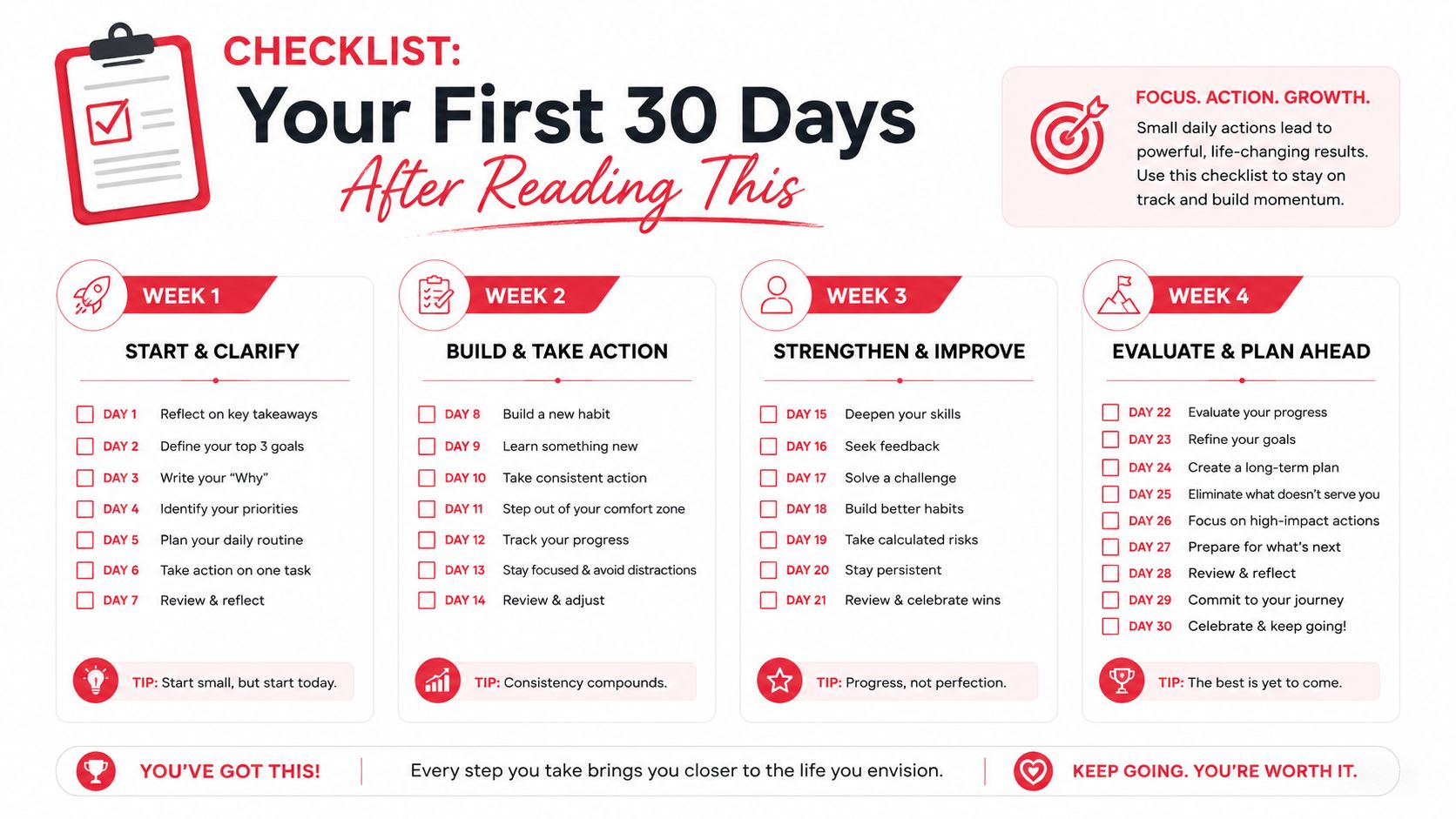
Your First 30 Days After Reading This
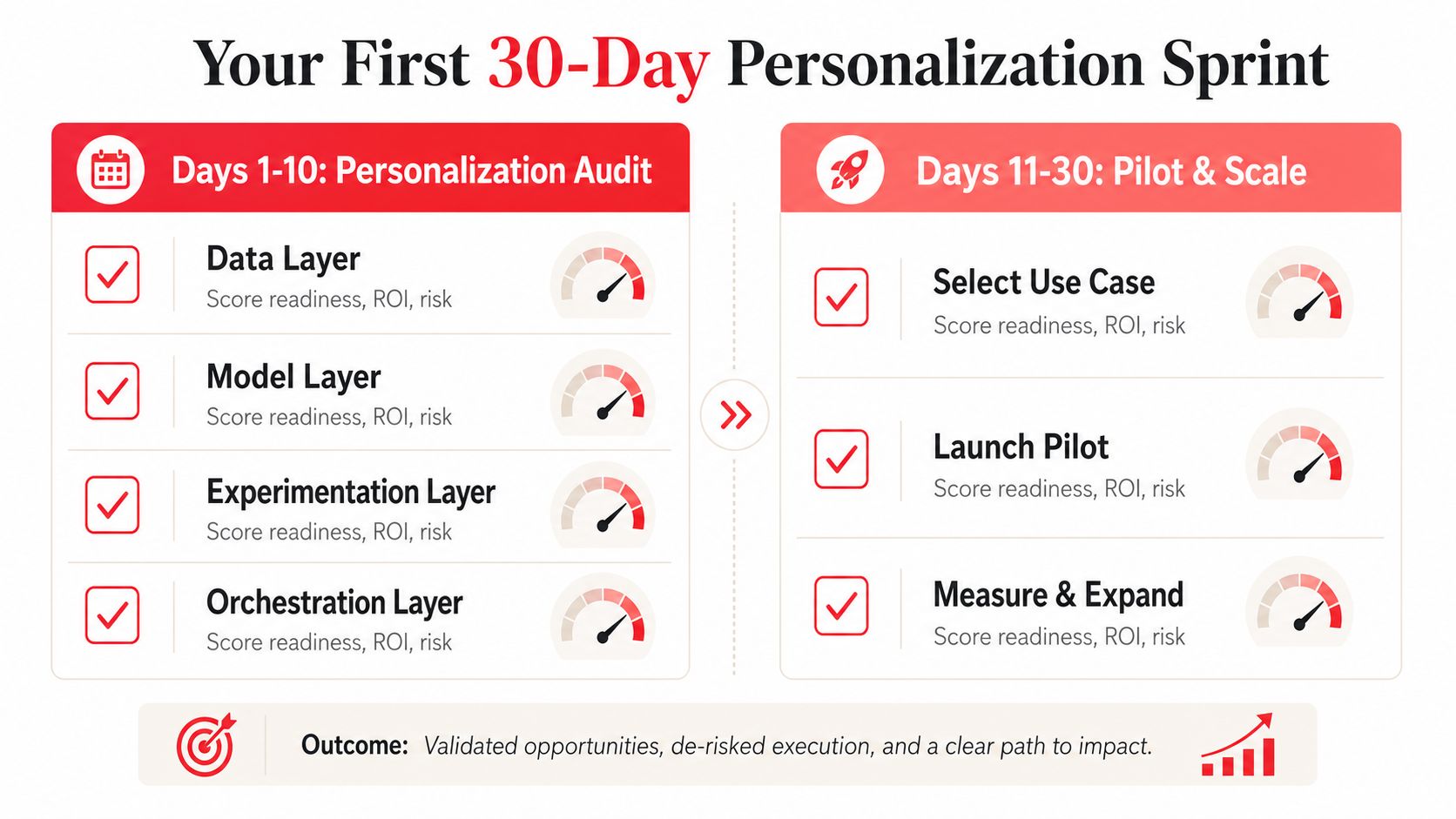
Treat AI personalization as an operating-model test, not a platform purchase. Spend the first ten days auditing whether the company can run one controlled use case with clear ownership, measurement, and risk controls.
Score each layer for readiness, commercial evidence, and risk:
- Data layer: Can the team identify the source, freshness, consent state, and owner for every signal?
- Model layer: Does the proposed model fit the volume and quality of the available signal?
- Experimentation layer: Is there a control, holdout, primary metric, and decision threshold?
- Orchestration layer: Does a score trigger a documented action with an owner and override path?
Choose one high-intent surface after the audit. A pricing page, product detail page, landing page, or sales follow-up email gives the team a bounded test. Avoid a broad “personalize the customer journey” program. It introduces too many variables to produce a clean readout.
The pilot brief
Write the hypothesis before anyone changes the experience. The brief should force decisions about audience, action, measurement, and accountability.
| Pilot field | Required decision |
|---|---|
| Use case | Which surface and buyer action will change? |
| Audience | Which known or anonymous segment qualifies? |
| Signal | Which consented event or attribute informs the decision? |
| Treatment | What changes for the treatment group? |
| Control | What does the control group receive? |
| Primary metric | Which commercial outcome decides the test? |
| Guardrail | What must not deteriorate, such as trust or qualified pipeline? |
| Owner | Who can ship, pause, and interpret the result? |
| Readout | When will the team make the kill-or-compound decision? |
Use a build or hybrid path for control surfaces. Choose a vendor path only when speed clearly outweighs ownership and the platform exposes the data, decision, and measurement required for review.
The week-four decision
End the sprint with a commercial readout tied to revenue per visitor, pipeline progression, completed purchase, or another agreed business outcome. Click-through can diagnose behavior, but it should not determine whether the company scales the program.
Pause the pilot if consent logging, event quality, control assignment, or override mechanics are incomplete. If the experience changes a real decision and clears the pre-registered threshold without damaging guardrails, expand carefully, one surface or audience at a time.
Bring your current personalization stack, funnel data, and one high-intent use case to Stimulead for an operating-model audit before approving another AI personalization purchase.